From Outsourced Thinking to the Extended Mind
By the End of This Unit, Mindgleians Will Learn: AI may answer before the learner’s **Natural Intelligence** begins to question, connect or judge. Mindgleians will activate their minds before prompting—examining assumptions, systemic connections, warm human contexts and evidence to refine raw curiosity into purposeful inquiry. They will use AI as an **extended mind** that expands research and perspectives without outsourcing their judgement, meaning-making or responsibility for knowledge.
Why Mindgle Courses are essential for NI–AI Collaborative Thinking: The Dual Art of Prompting the Mind and AI through Systematic and Systemic Inquiry
The Current Fabric
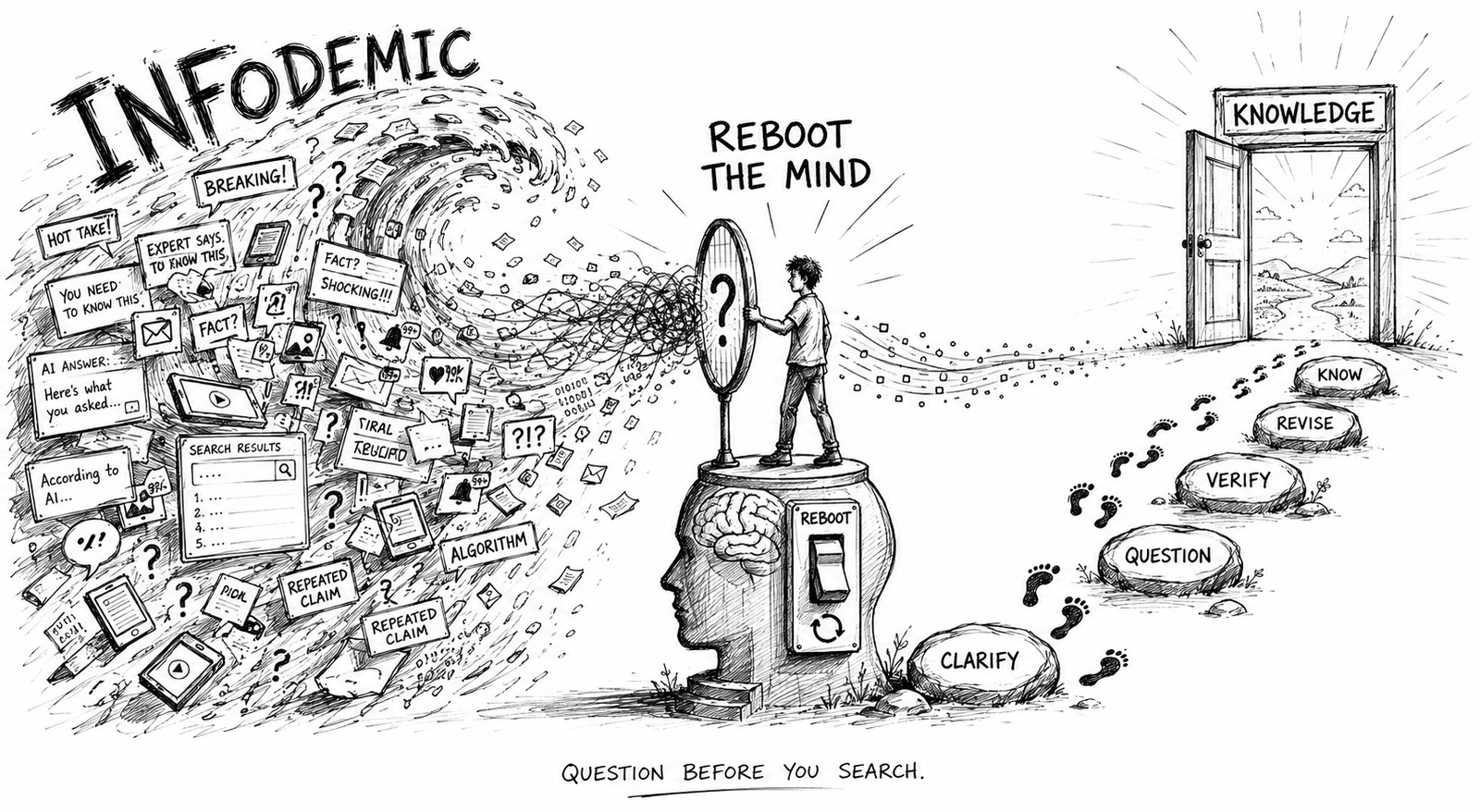
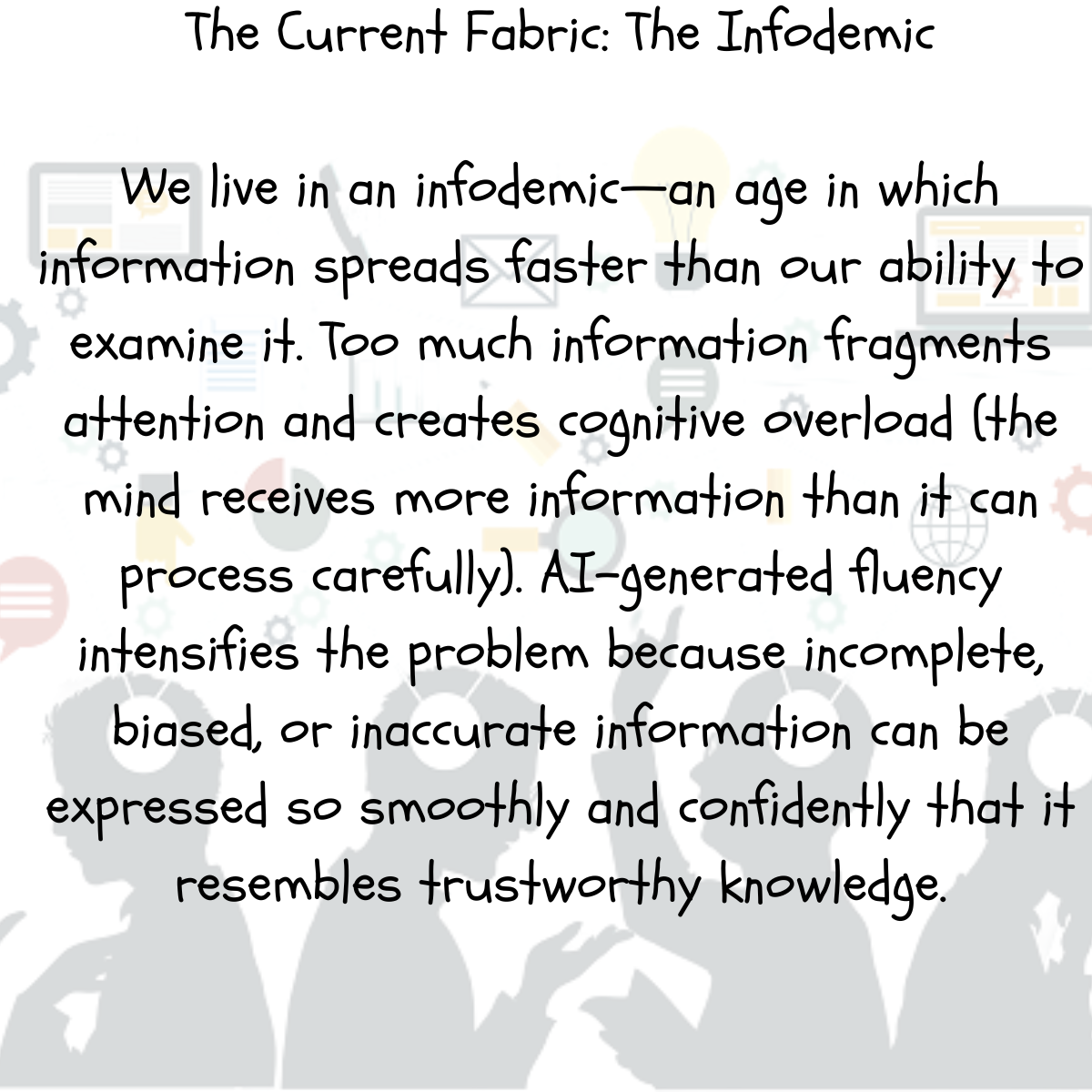
Repeated claims begin to feel true through the illusory truth effect (familiarity is mistaken for accuracy). Confirmation bias (seeking and accepting information that supports what we already believe) protects existing beliefs from challenge. Algorithms create filter bubbles (personalised information environments that hide opposing material), while echo chambers (spaces where similar beliefs are repeatedly reinforced by like-minded voices) make one version of reality appear universally accepted. Emotion can produce affective bias (judging a claim by how it makes us feel rather than by the evidence supporting it), and reasoning fallacies such as the straw-man fallacy (distorting another person’s argument into a weaker version that is easier to attack) weaken intellectual fairness.
The Pain Point and The Problem Statement
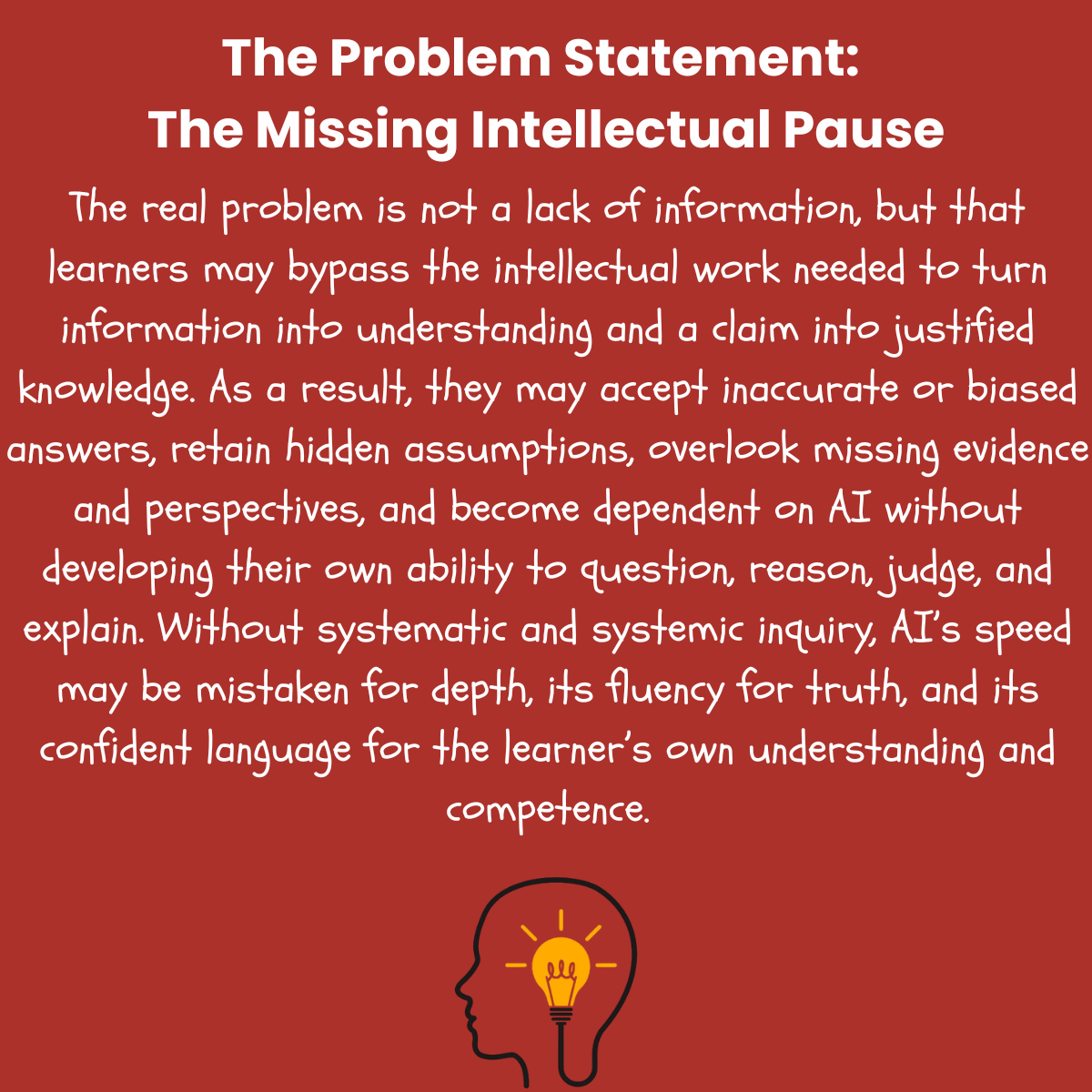
Why to inquire and Why Mindgle activates the Mind before AI
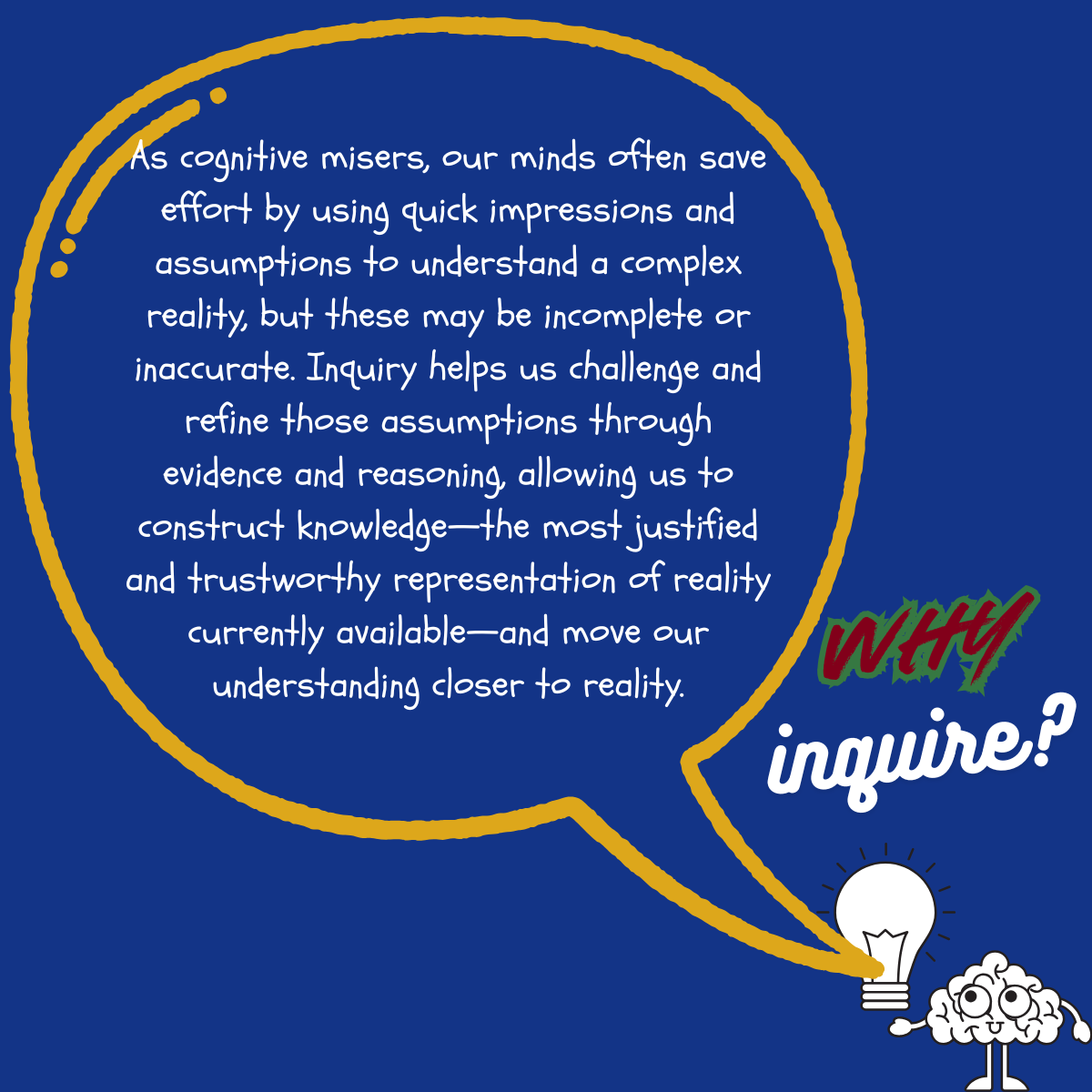
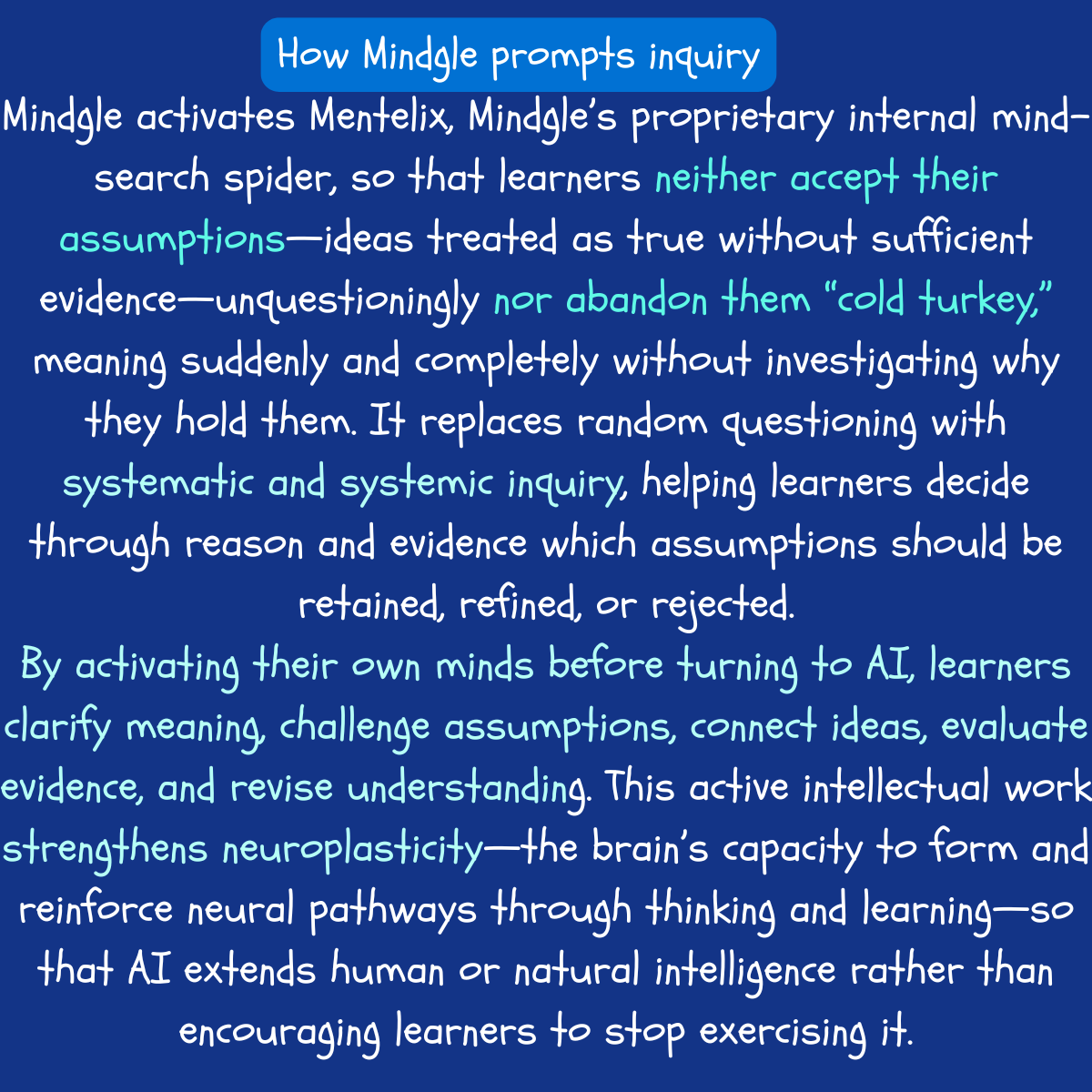
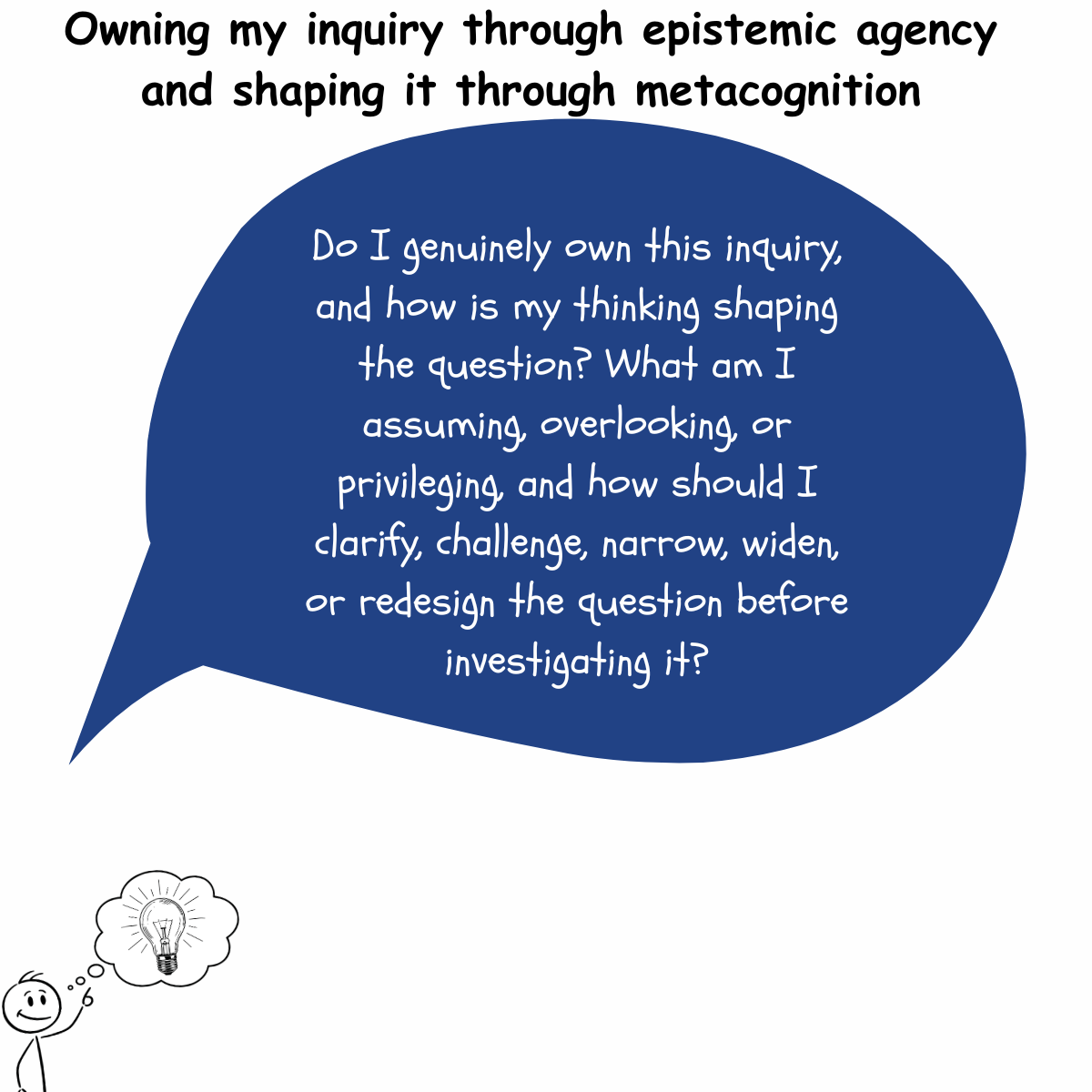
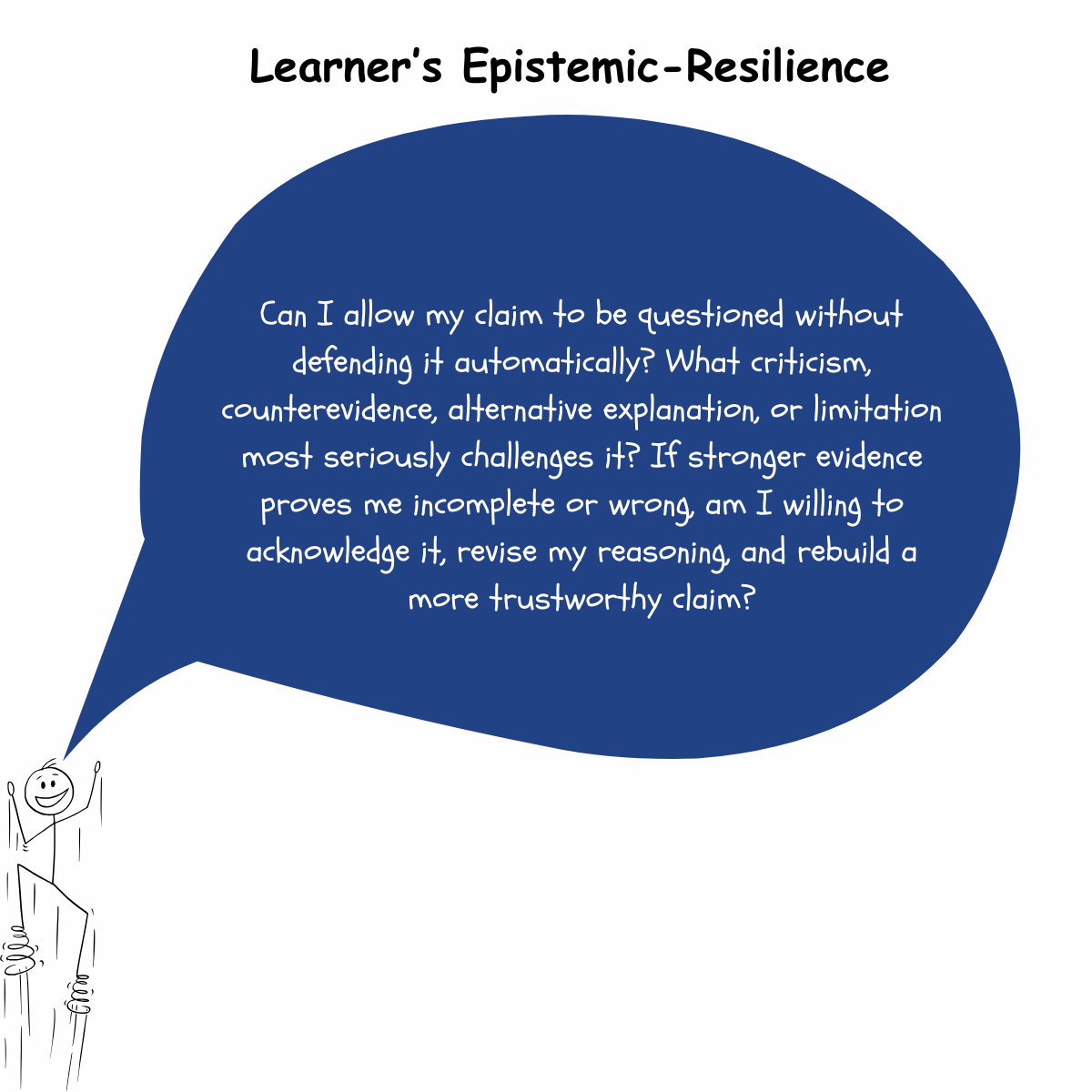
Own Your Inquiry through Epistemic Agency; Shape It through Metacognition; Strengthen Your Knowledge Claims through Epistemic Resilience
This is the most precise because agency governs ownership, metacognition regulates thinking, and epistemic resilience enables claims to survive criticism, correction, and revision.
Across all Mindgle course modules, learners take epistemic ownership by deciding what genuinely deserves investigation and accepting responsibility for the questions and knowledge claims they construct. Through metacognition, they examine how their assumptions, experiences, biases, emotions, wording, reasoning, evidence choices, and use of AI shape the entire inquiry. Through epistemic resilience, they develop the intellectual courage to expose their ideas to criticism, acknowledge uncertainty and limitations, and revise their conclusions when stronger evidence or reasoning emerges. AI serves as an extended critical-thinking partner that generates possibilities, reveals weaknesses, and challenges claims, while the learner retains ownership of the inquiry and responsibility for judging, validating, refining, and defending what can justifiably be known.
The Mindgle Solution: Rebooting Inquiry before Prompting
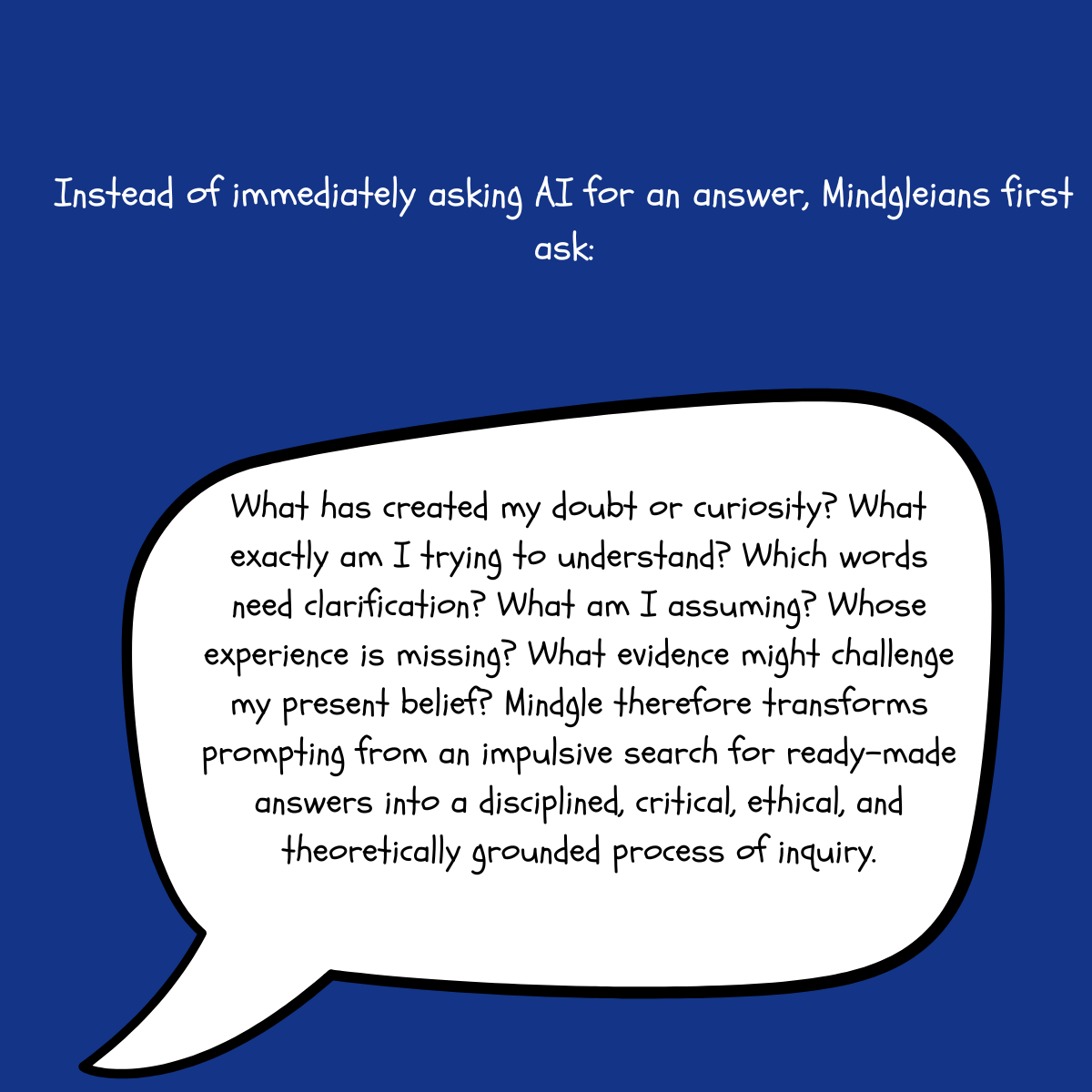
Mindgle consciously enters the decisive space between a raw question and an immediately generated answer. It creates an intellectual pause in which learners activate Mentelix—the internal inquiry engine—before turning to the external AI engine.
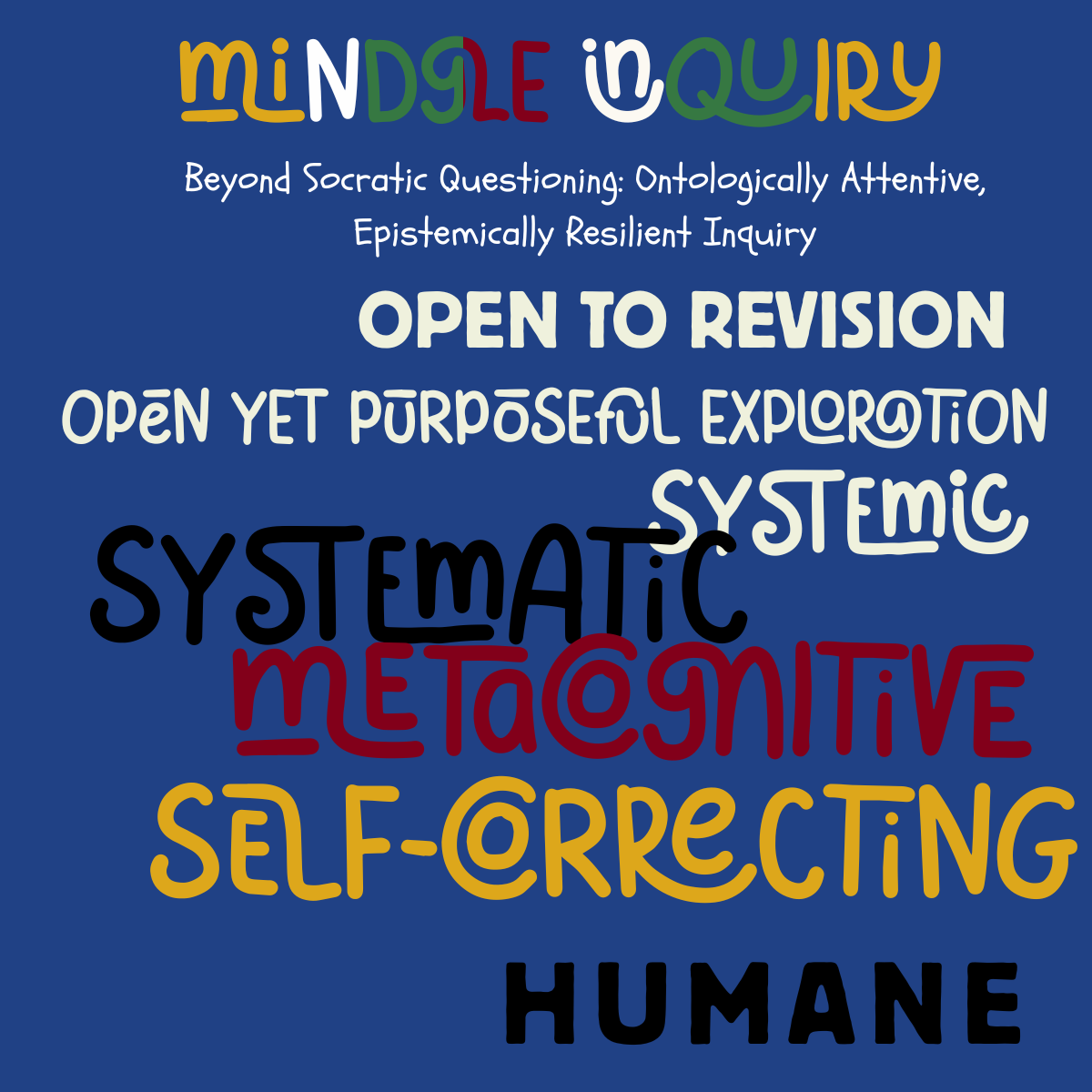
Mindgle inquiry is structured because it has a deliberate architecture: the learner moves from uncertainty and raw curiosity to question refinement, investigation, judgement, reflection, and renewed inquiry. The structure gives the inquiry direction without making it rigid.
The Mindgleian Inquiry
Mindgleian inquiry is structured because it guides the learner from uncertainty and curiosity through question refinement, investigation, judgement, reflection, and renewed inquiry without restricting exploration. Exploration is the open yet purposeful process of following curiosity, considering different paths, perspectives, possibilities, and unexpected discoveries before deciding where the strongest evidence leads. It is humane because evidence is examined alongside emotions, lived experiences, diverse voices, power inequalities, and possible consequences, ensuring that knowledge is constructed not only rigorously but also empathetically, ethically, and responsibly.
Why Mindgle Inquiry Is Structured, Systematic and Systemic
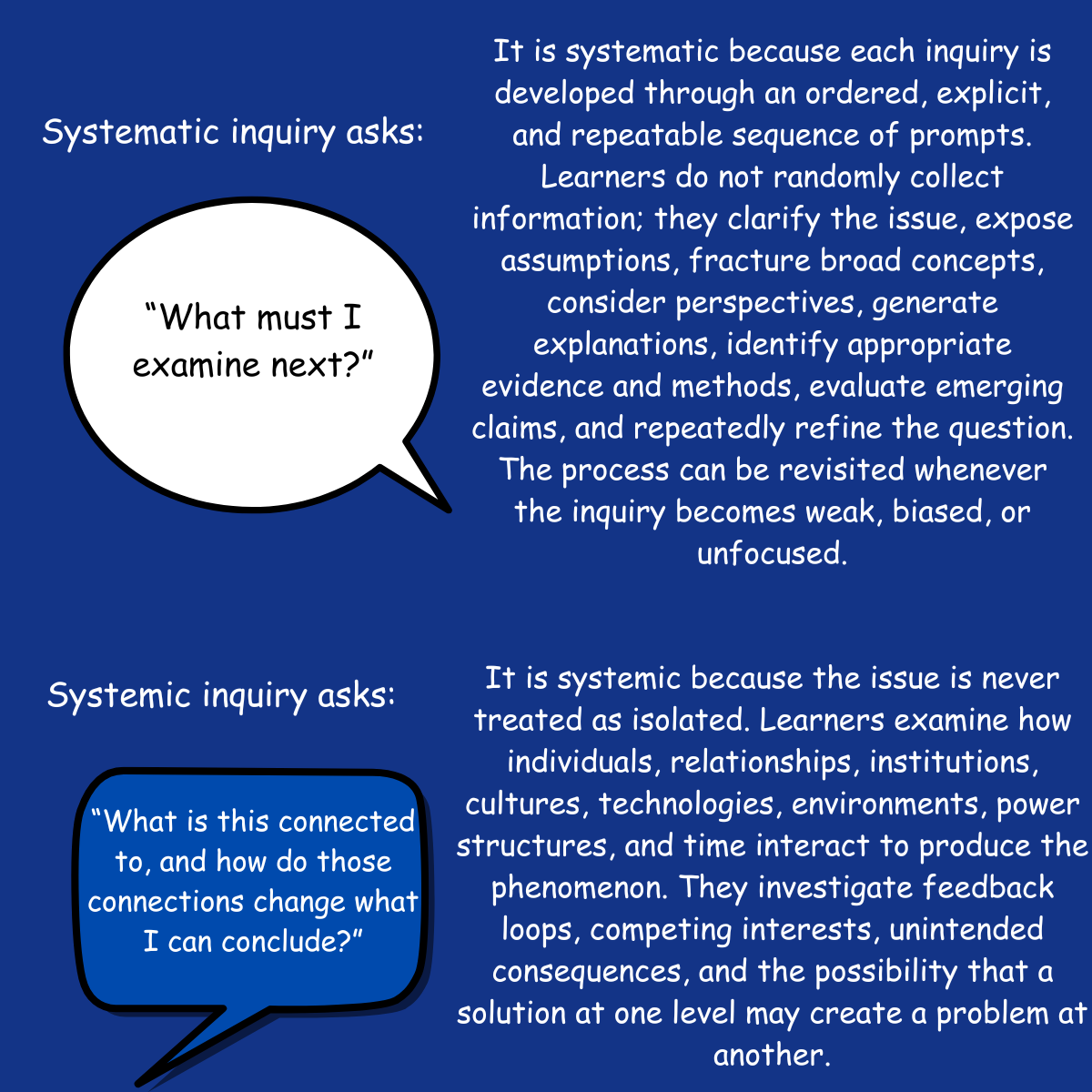
Mindgle inquiry replaces random questioning with systematic inquiry, in which every inquiry follows the same deliberate sequence—clarifying meanings, uncovering assumptions, examining perspectives, identifying evidence, testing explanations, and refining the question. The process is repeatable because learners can apply these stages to any issue and return to them whenever their inquiry becomes unclear, narrow, biased, or unsupported. Systemic inquiry then widens the lens by examining the connections among contexts, people, institutions, power structures, causes, and consequences, helping learners decide through reason and evidence which assumptions should be retained, refined, or rejected.
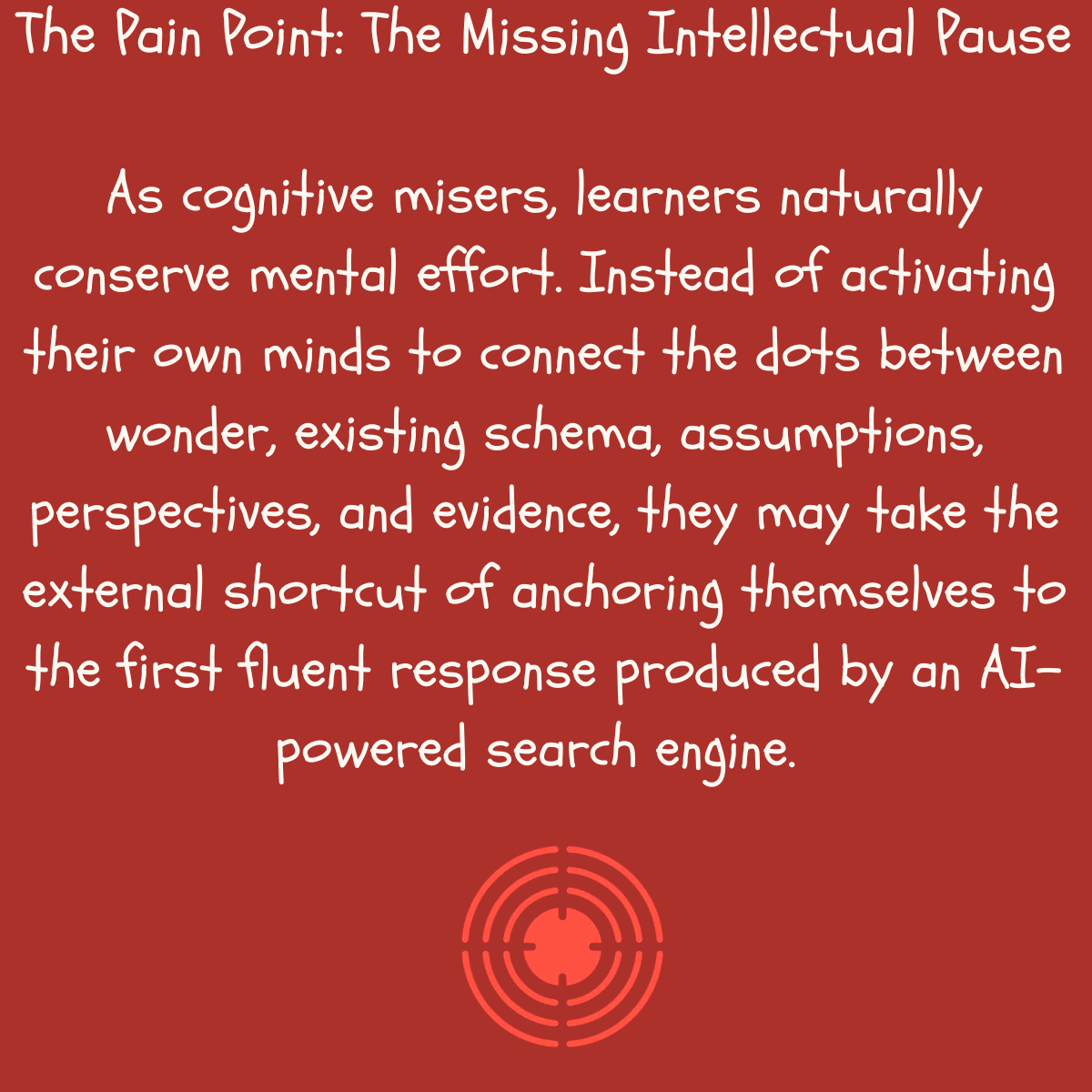
The courses of Mindgle address one of the deepest educational pains of the AI age: vast amounts of information are now only a click or prompt away, allowing learners to obtain polished answers without activating the thinking through which genuine understanding is constructed. When a raw question is passed directly to the external AI search engine, learners risk outsourcing the essential work of their Natural Intelligence—questioning, interpreting, reasoning, judging and making meaning. If the answer arrives before the mind has examined what the question means, assumes, overlooks and demands as evidence, AI becomes a substitute for thinking rather than an instrument for extending it.
Grounded in Extended Mind theory, the ‘Decisive Space’ where Mindgle intervenes
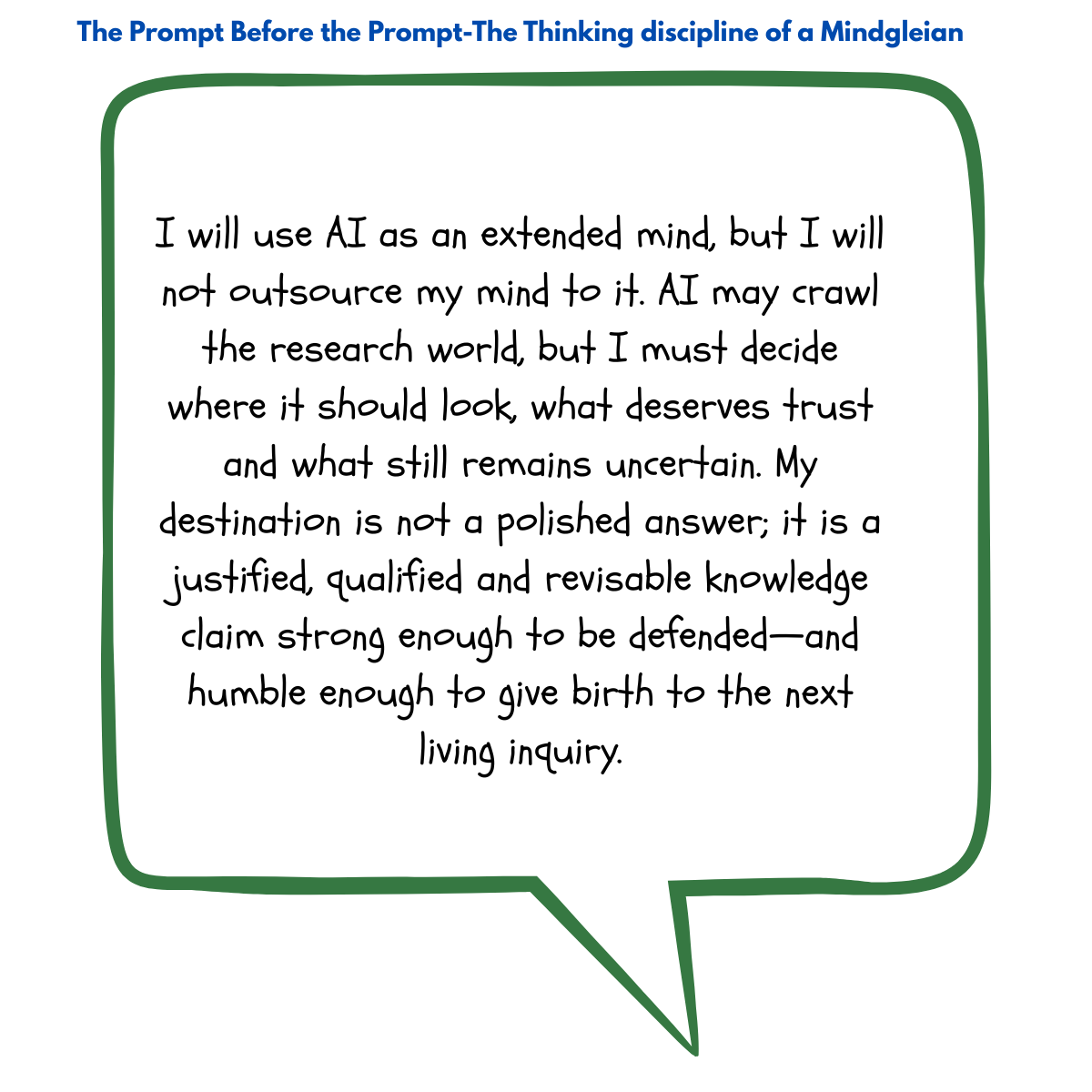
Mindgle enters the decisive space between the learner’s raw question and AI’s instant answer, activating Natural Intelligence before external generation begins. Grounded in Extended Mind Theory, it ensures that AI functions as an extension of the learner’s inquiry—expanding the ability to explore, compare, and test ideas—without replacing the learner’s own questioning, reasoning, judgement, and meaning-making.
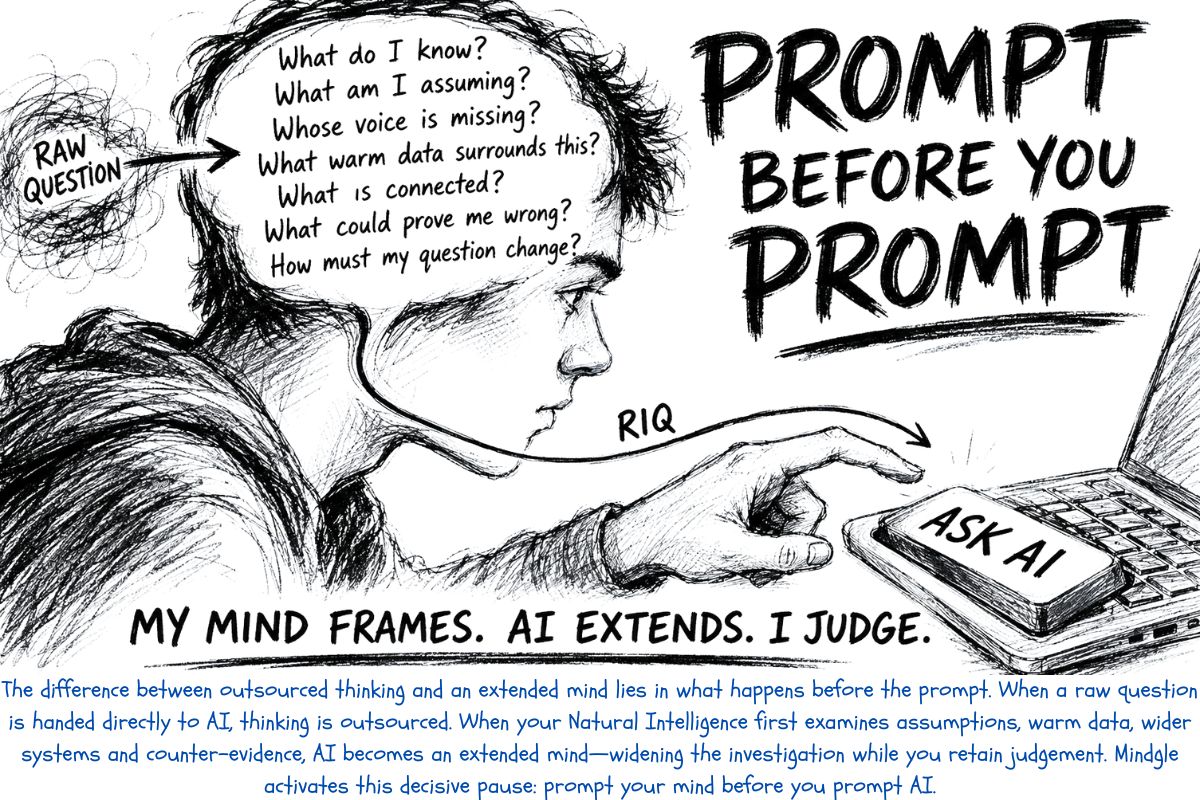
Mindgle enters the small but decisive cognitive space between the moment a raw question is asked and the moment it is passed directly to the external AI Spider for an instant answer. This is where Mindgle activates purposeful NI–AI collaborative thinking: Natural Intelligence examines, frames and governs the inquiry, while Artificial Intelligence extends the investigation by searching for evidence, perspectives, patterns and possibilities. If the Mentelix is bypassed, Natural Intelligence does not collaborate with AI—it is outsourced to AI, reducing the learner from an architect of knowledge to a passive recipient of generated answers.
Instead of passing the first question directly to AI, Mindgleians activate their Mentelix—the internal Mind Spider—to crawl both the mind and the question before asking the external AI Spider to crawl the research web. Mentelix preserves the original curiosity, purpose and command term while uncovering hidden meanings, prior knowledge, assumptions, biases, conceptual connections, evidential needs and missing perspectives. It examines the inquiry systematically by checking each element with precision, and systemically by tracing how those elements interact within wider contexts, relationships, power structures, feedback loops and consequences. This includes examining warm data—the living human realities surrounding a phenomenon, such as emotions, cultures, relationships and circumstances—which helps learners understand not only what is happening, but why it is happening and how its effects may spread across a system.
Through this process, the raw question becomes a meaningful Refined Inquiry Question (RIQ) and then an intellectually seasoned prompt. This prompt directs the AI Spider to investigate purposefully, find credible evidence, compare perspectives and justify its response rather than return a large, unfocused bag of information. Mindgleians then filter, connect, evaluate and refine that information into focused, trustworthy and revisable knowledge. Even this knowledge does not close the inquiry: its limitations, anomalies, uncertainties and emerging connections give birth to another living inquiry. Mindgle therefore disrupts prompt-and-answer dependency by teaching learners to search within before searching outside, collaborate without outsourcing thought, refine before prompting, evaluate before accepting and continue inquiring after an answer appears.
How Mindgle makes the Learner’s Inner Dialogue Visible
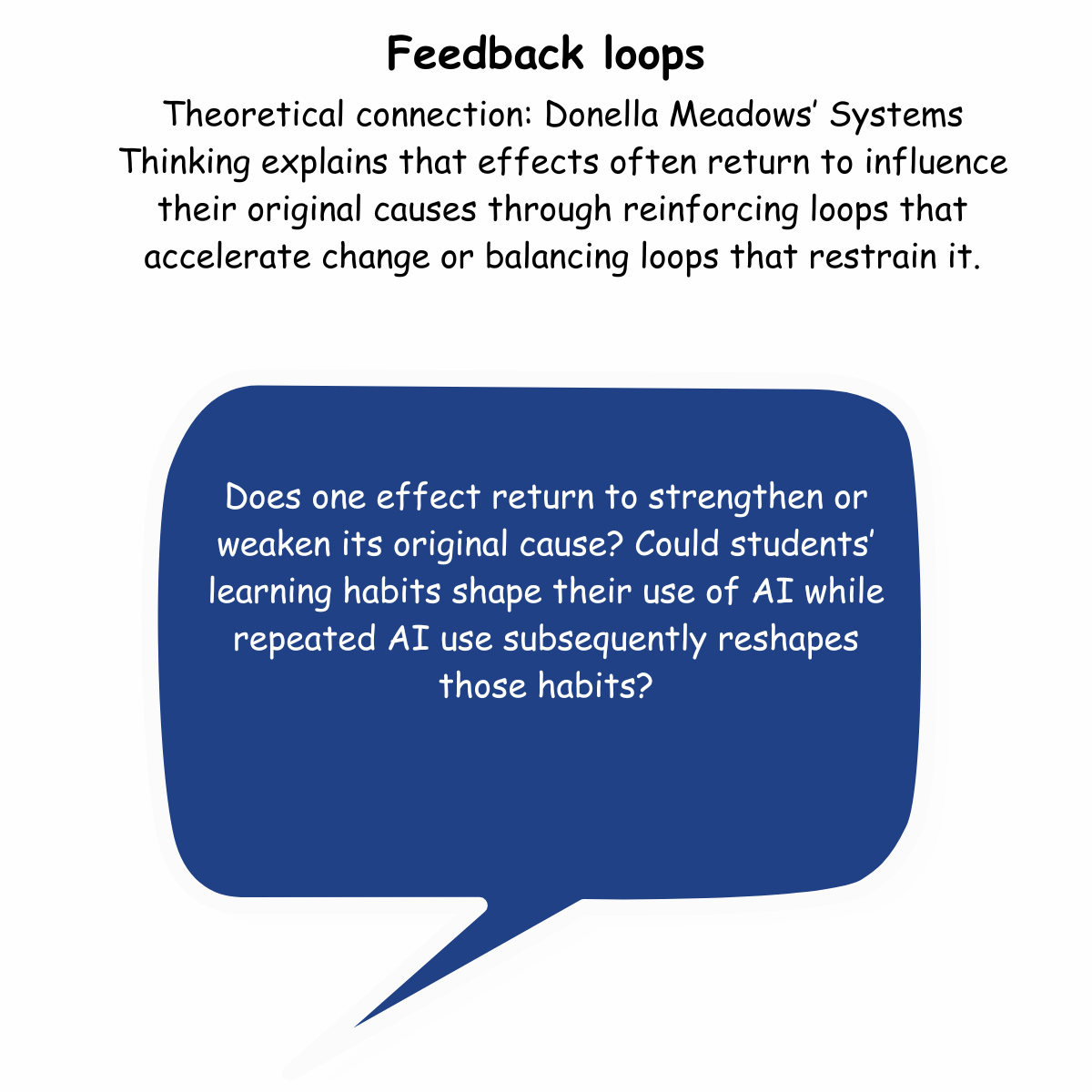
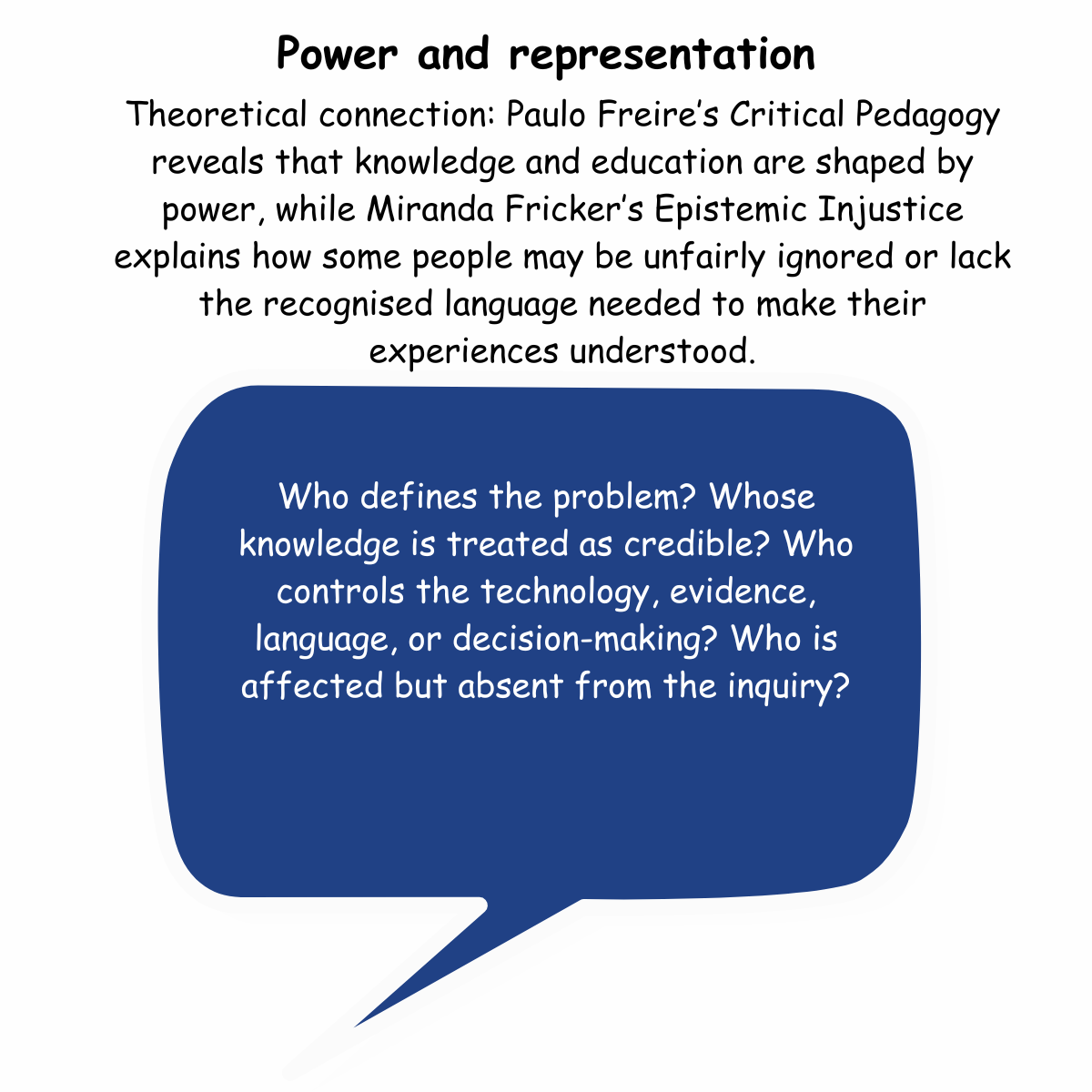
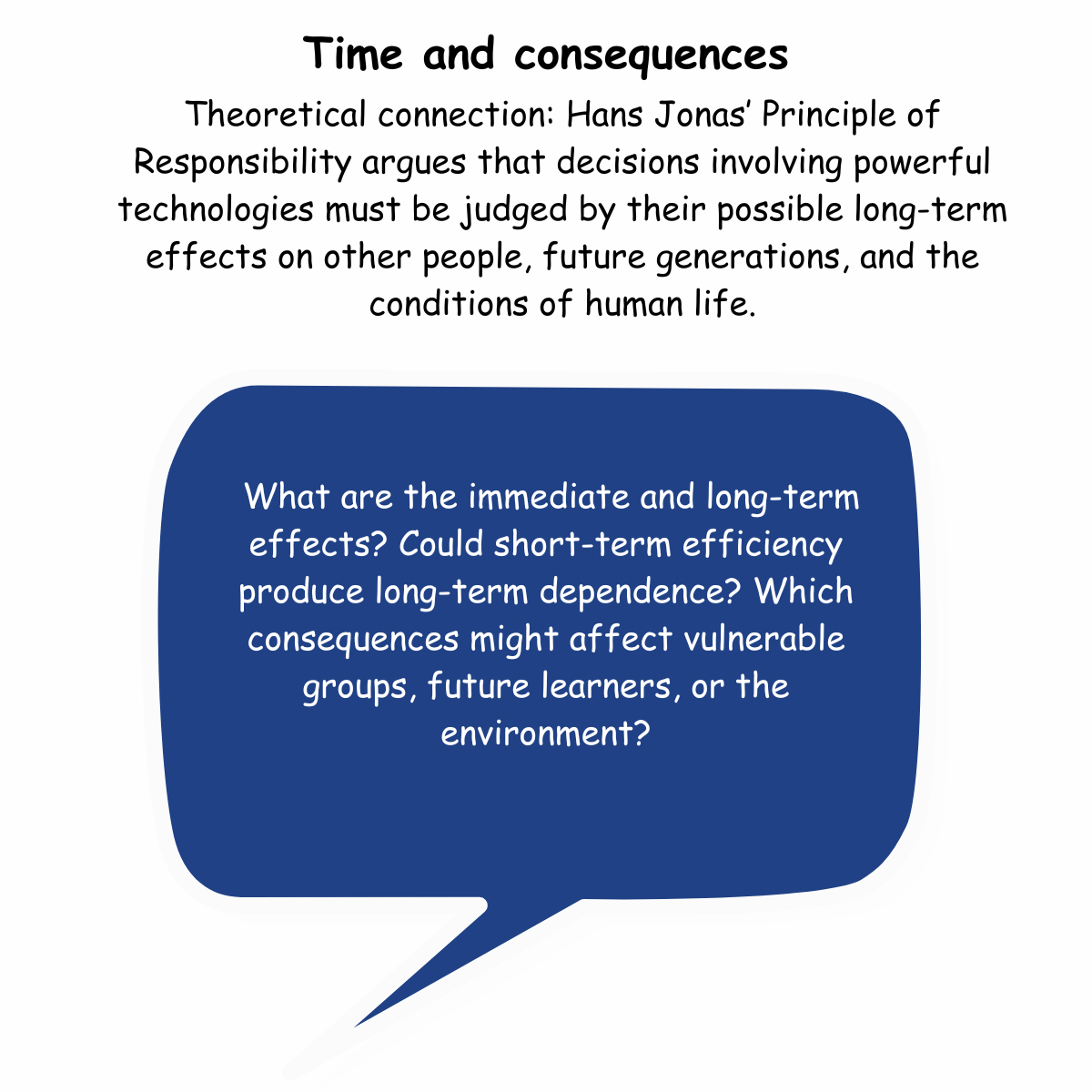
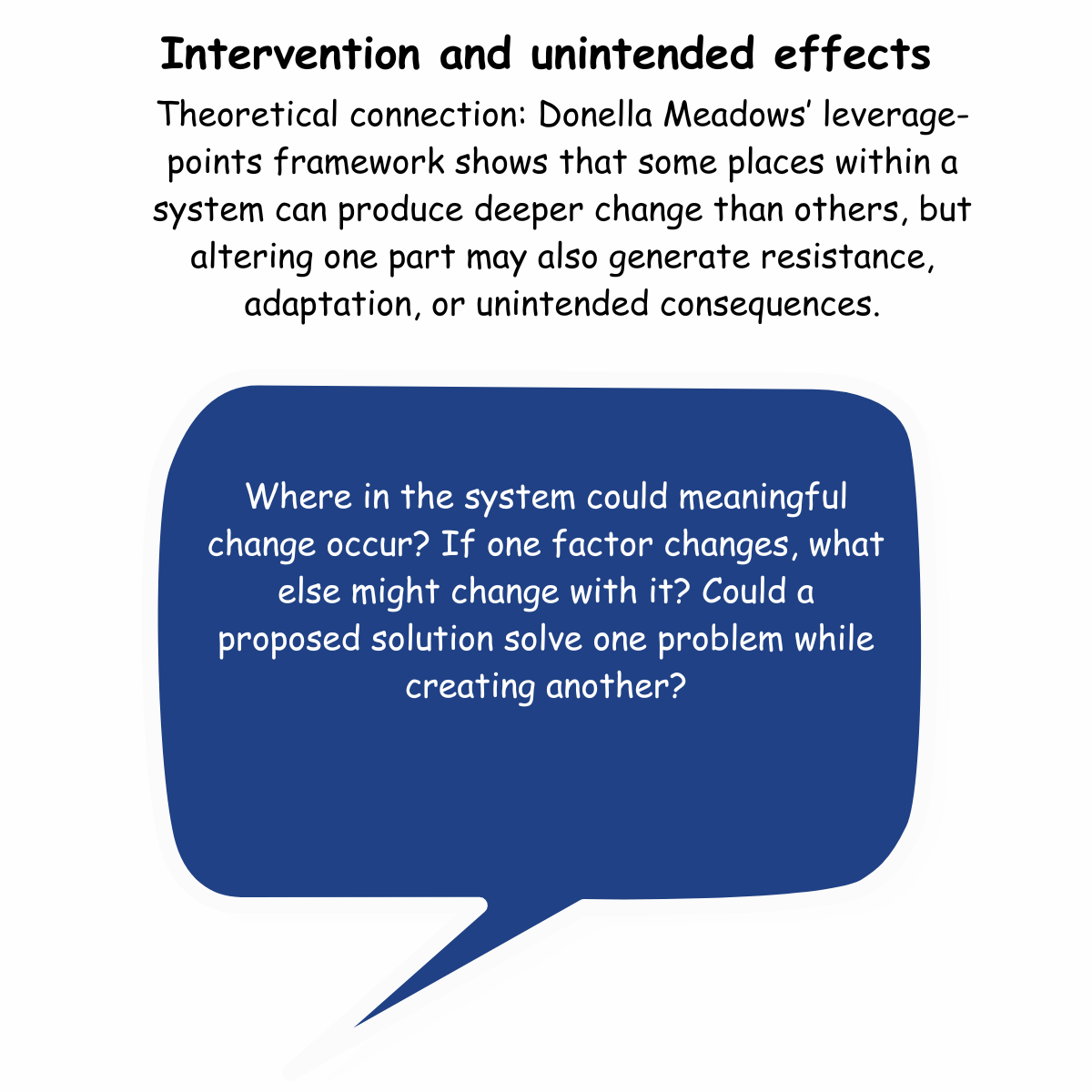
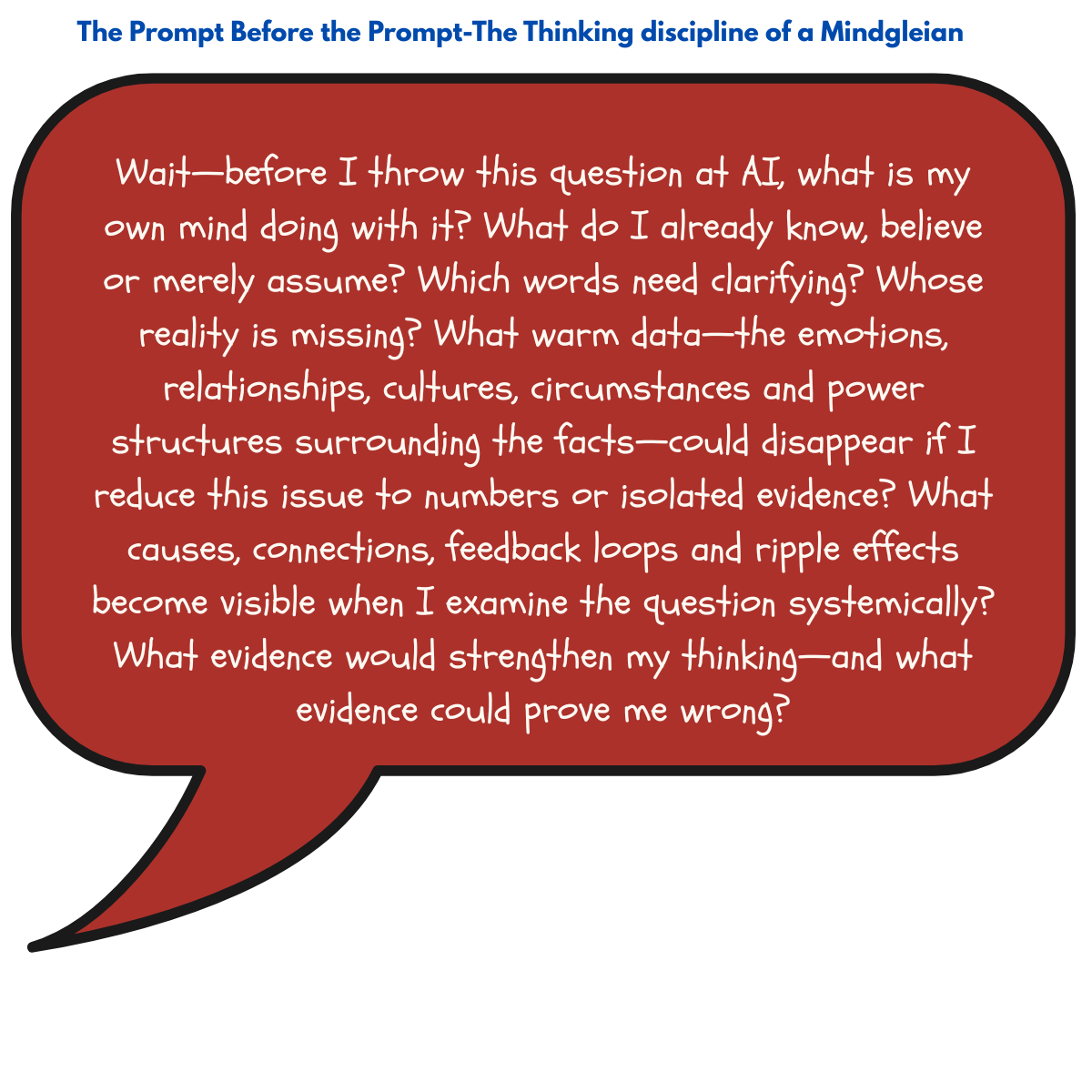
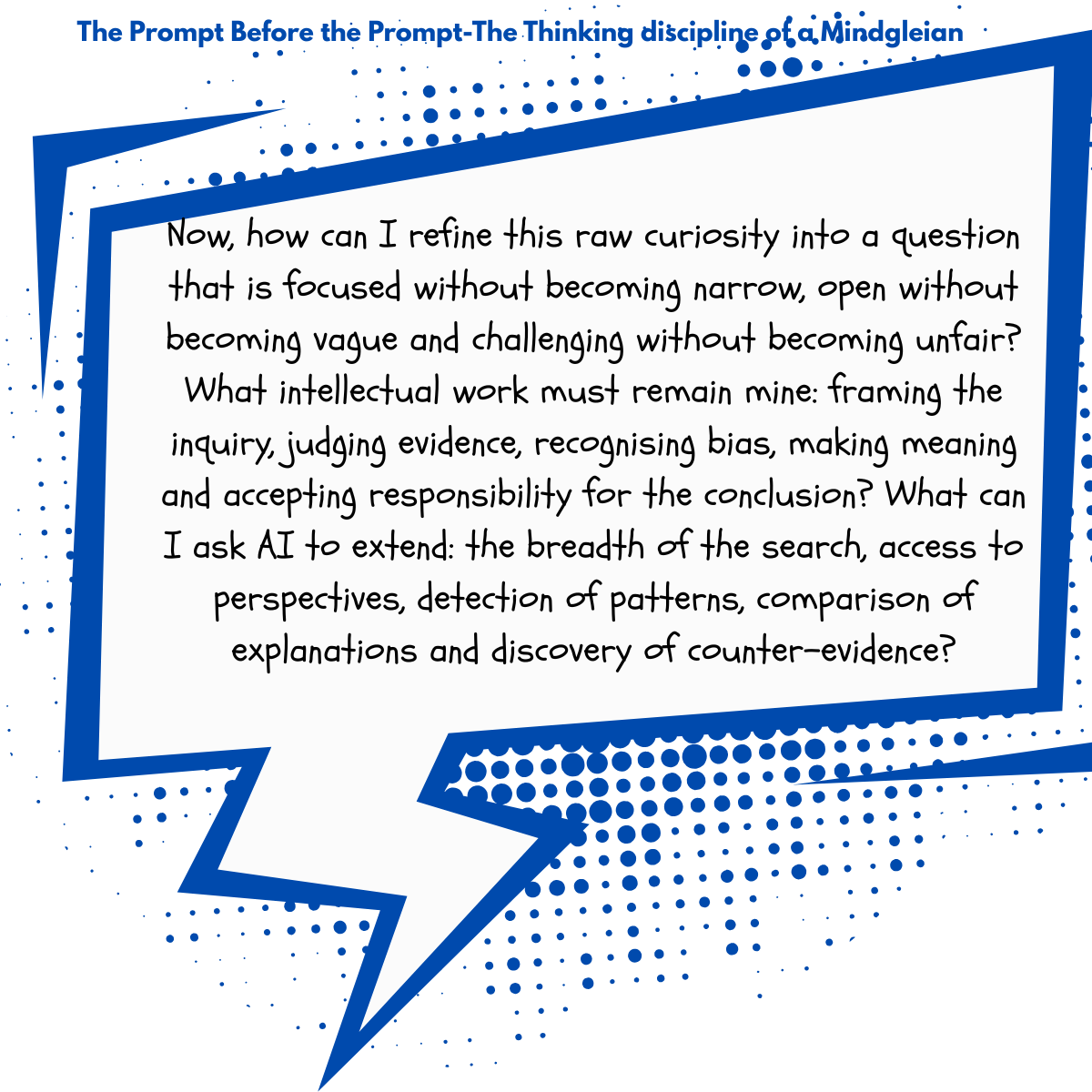
Throughout the Mindgle courses, thought bubbles and speech bubbles function as a deliberate visual language for activating the learner’s Natural Intelligence. A thought bubble reveals the learner’s silent metacognitive process—the prior knowledge, curiosity, assumptions, biases, doubts and self-questions being examined within—whereas a speech bubble makes cognitive guidance explicit: it may articulate the learner’s refined question, claim or counterclaim, or allow a learning theory, cognitive tool or epistemic principle to “speak” directly to the learner’s mind through a precise prompt.
Together, these bubbles embody Mindgle’s central discipline: before learners prompt AI, they must first activate the questions their own minds need to ask. Yet every inner prompt serves a distinct purpose—some initiate inquiry, some expose assumptions and bias, some test evidence and reasoning, and others challenge, falsify or revise an emerging knowledge claim.
Metacognitive Inquiry-Design Prompts versus Epistemic Prompts
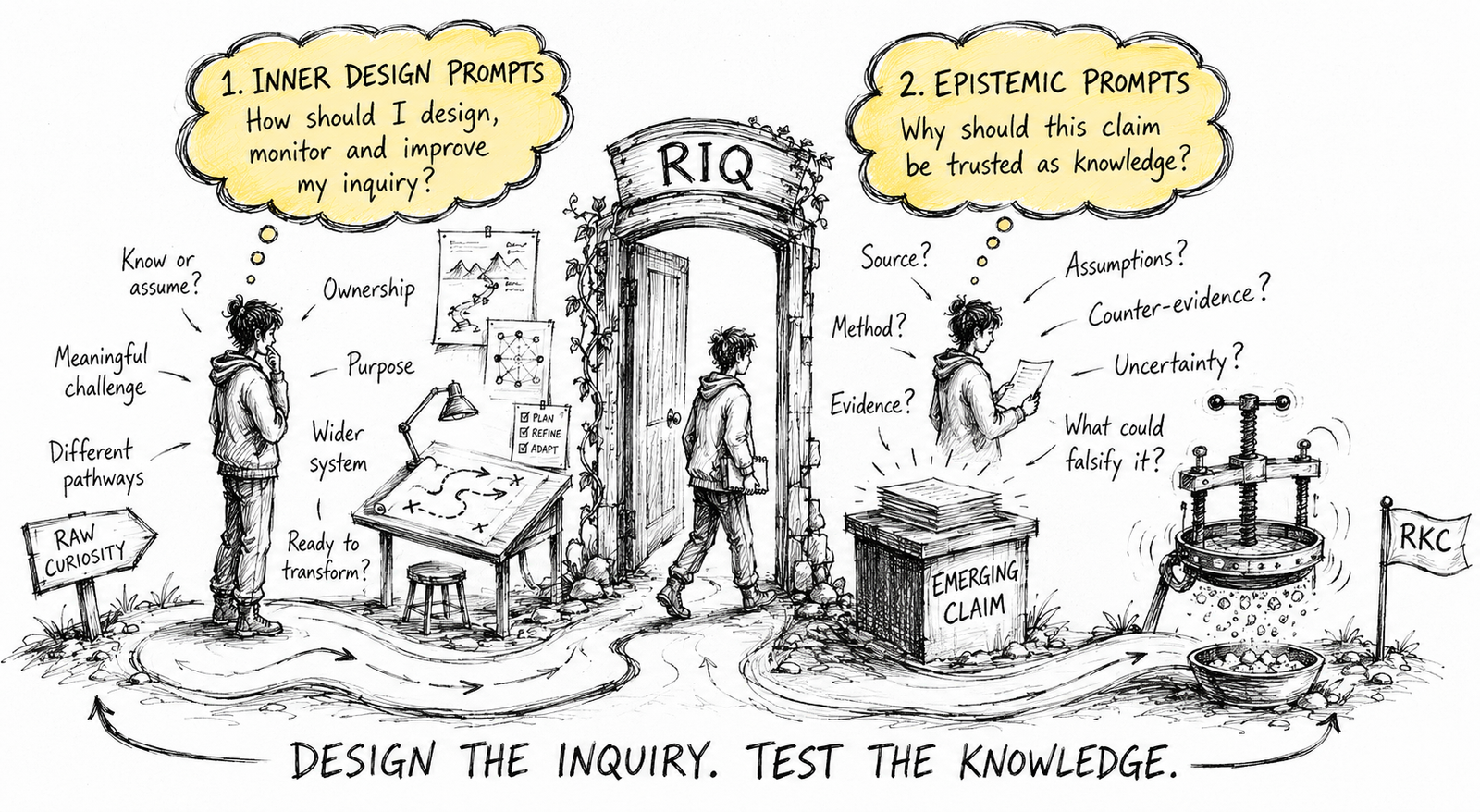
| Point of Distinction | Metacognitive Inquiry-Design Prompts | Epistemic Prompts |
|---|---|---|
| Central question | How should I design, monitor and improve my inquiry? | Why should this emerging claim be accepted or trusted as knowledge? |
| Primary focus | The learner’s thinking and inquiry process | The credibility and justification of information, evidence and knowledge claims |
| What they examine | Curiosity, prior understanding, motivation, framing, choices, challenge, pathways, systems and progress | Sources, methods, evidence, assumptions, reasoning, alternative explanations, uncertainty and falsifiability |
| When they are mainly used | From raw curiosity through the design and refinement of the RIQ, and whenever the inquiry needs redirecting | Once information, evidence or explanations begin to emerge, especially while constructing the IKC and stress-testing it into an RKC |
| What they help the learner do | Take ownership, frame the inquiry, choose a pathway, remain engaged, notice blind spots and redesign the process | Distinguish information from evidence, test claims, expose weaknesses, compare explanations and determine warranted confidence |
| Primary outcome | A purposeful, personally meaningful and well-designed inquiry | A justified, qualified, trustworthy and revisable knowledge claim |
| Relationship with AI | Determines what deserves to be investigated and how AI should be directed | Determines which parts of AI’s response deserve trust, rejection, qualification or further investigation |
The Precise Difference
Metacognitive Inquiry-Design Prompts regulate how the learner conducts the inquiry. Epistemic Prompts regulate what the learner permits to count as knowledge.
A Metacognitive Inquiry-Design Prompt may ask:
How is the way I framed this inquiry influencing what I can see, search for and conclude?
An Epistemic Prompt may ask:
What evidence justifies this conclusion, how reliably was that evidence produced, and what could weaken or falsify the claim?
When Each Prompt Is Used in the Mindgle Journey
| Stage of the Inquiry | Dominant Prompt | Purpose |
|---|---|---|
| Raw curiosity arises | Metacognitive Inquiry-Design | Discover what genuinely deserves investigation and why it matters |
| Raw question becomes an RIQ | Metacognitive Inquiry-Design | Clarify meanings, examine framing, uncover assumptions and design the inquiry |
| RIQ is translated into an AI prompt | Both | Decide what AI should investigate and what evidence the response must provide |
| AI returns information and explanations | Epistemic | Examine sources, evidence, methods, assumptions, omissions and uncertainties |
| IKC is constructed | Epistemic | Judge whether the evidence and reasoning justify the initial claim |
| IKC is stress-tested into an RKC | Epistemic | Seek counter-evidence, alternative explanations, bias, limitations and opportunities for falsification |
| The inquiry is reflected upon | Metacognitive Inquiry-Design | Evaluate how the learner’s framing, choices and reasoning shaped the outcome |
| The next living inquiry emerges | Both | Use unresolved uncertainty to redesign the next inquiry and strengthen future knowledge |
The distinction is therefore not a rigid separation. Metacognitive regulation continues throughout the inquiry, while epistemic scrutiny may begin as soon as learners consider what evidence will be needed. Some Inner Design Prompts—particularly those grounded in Schema Theory, Meta-Inquiry and Transformative Learning—also perform an epistemic function because they challenge assumptions and reconstruct understanding. Their primary purpose, however, remains the conscious design and regulation of inquiry.
Epistemic questions also begin inside the learner’s mind. Only after the learner identifies what must be tested may some of them be reformulated as prompts to AI—for example, asking AI to locate counter-evidence, compare explanations or reveal limitations. AI may assist the epistemic investigation, but the learner retains the final judgement about what deserves to be accepted as knowledge.
In One Line
Inner Design Prompts help the learner architect the journey towards knowledge; Epistemic Prompts test whether the destination reached genuinely deserves to be called knowledge.
The Systemic Inquiry
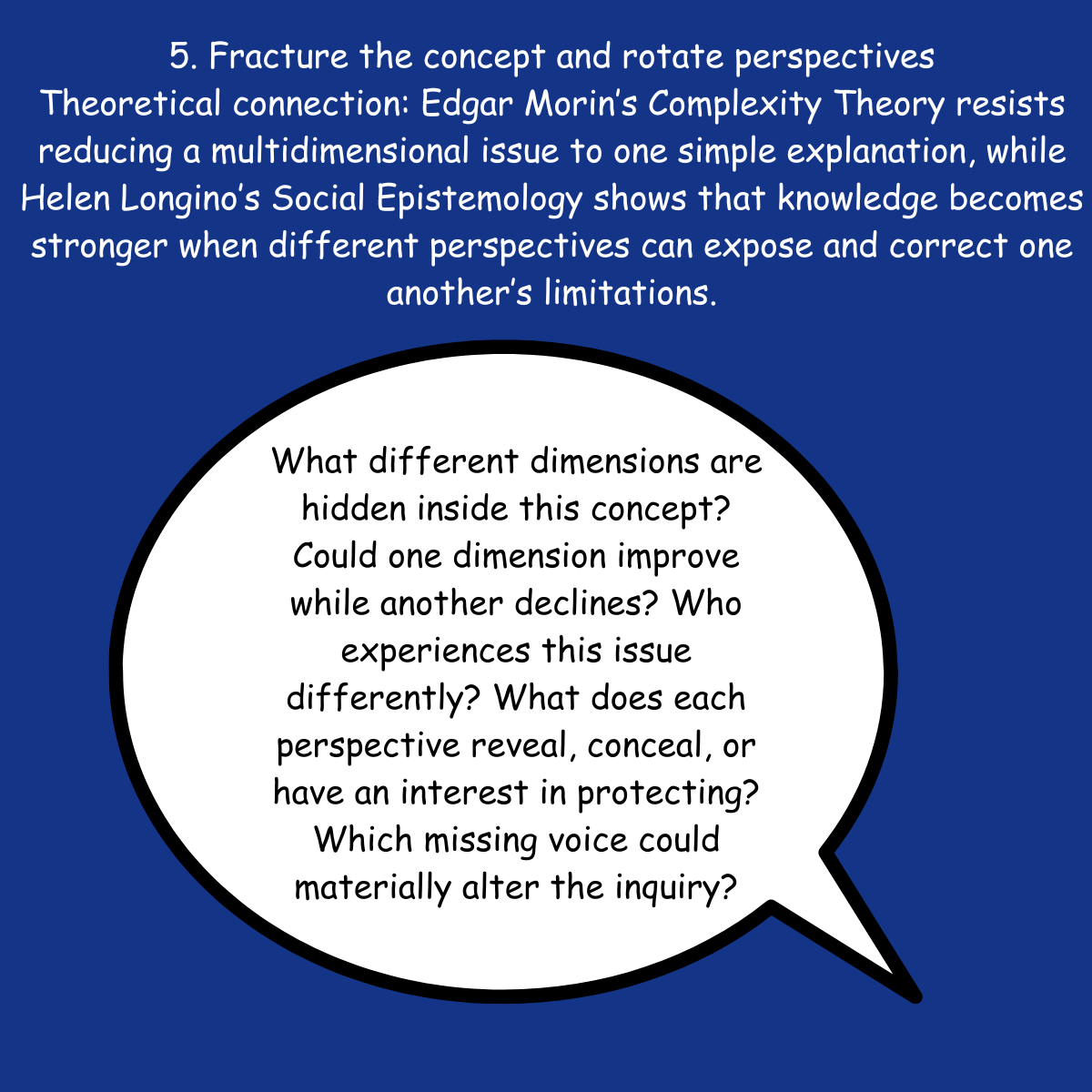
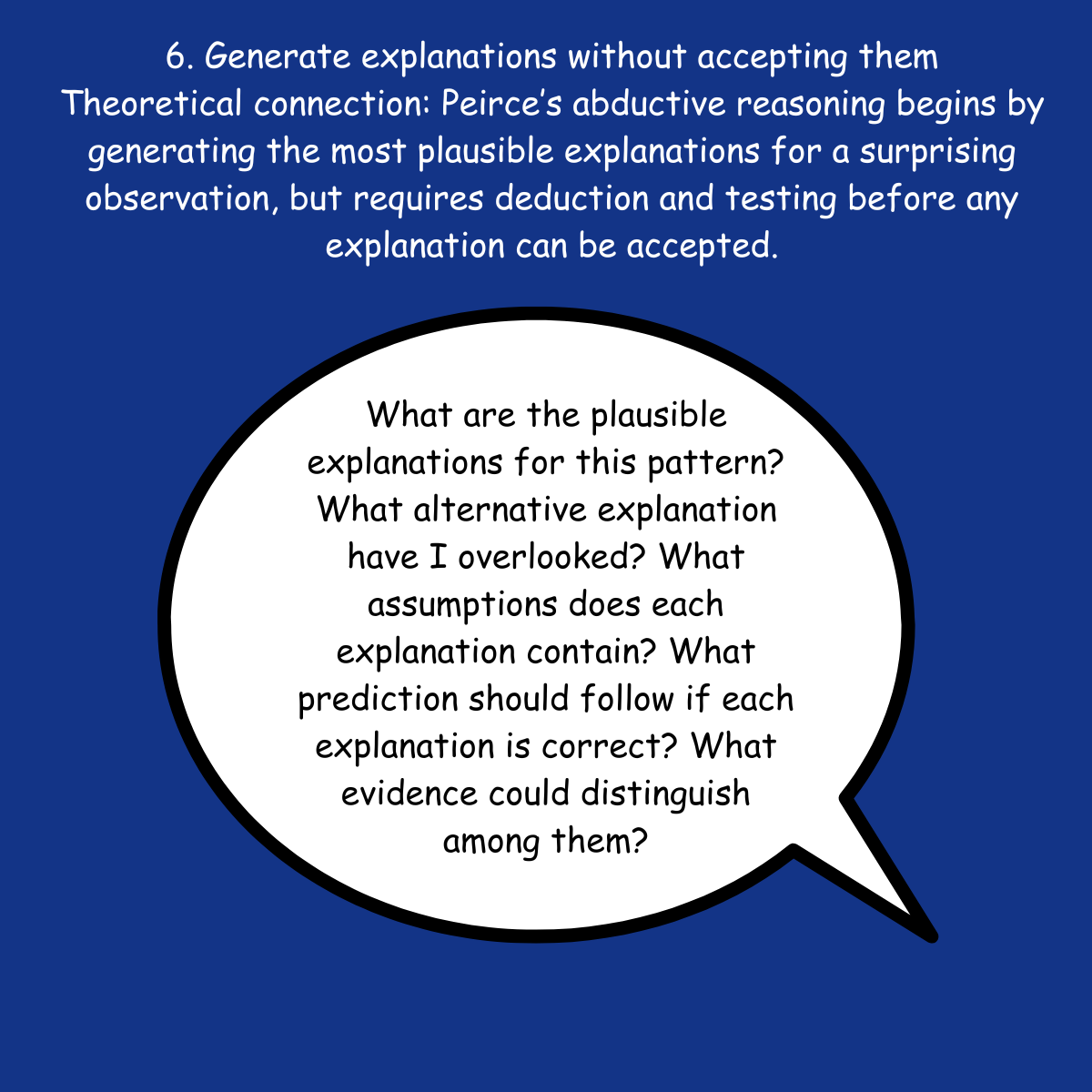
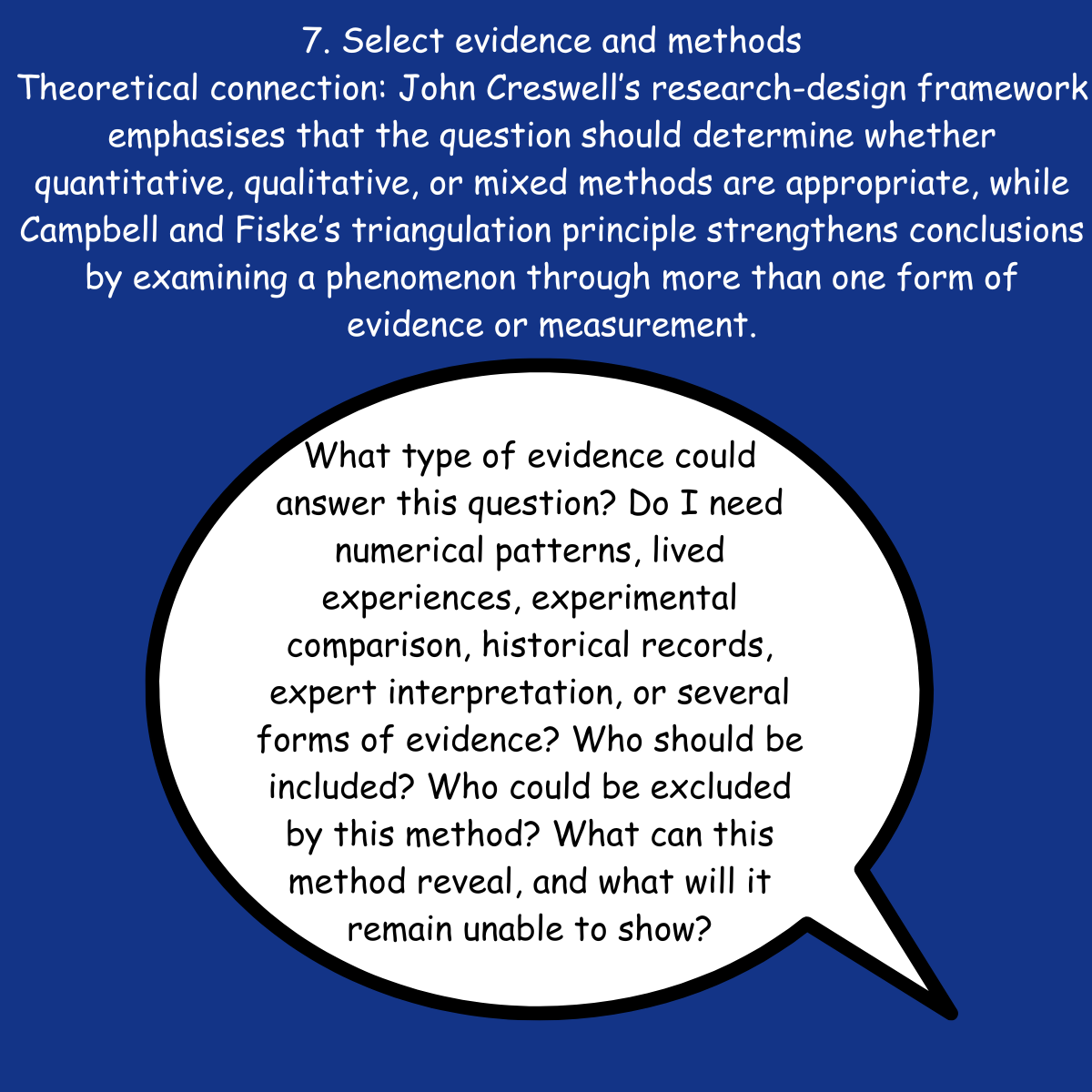
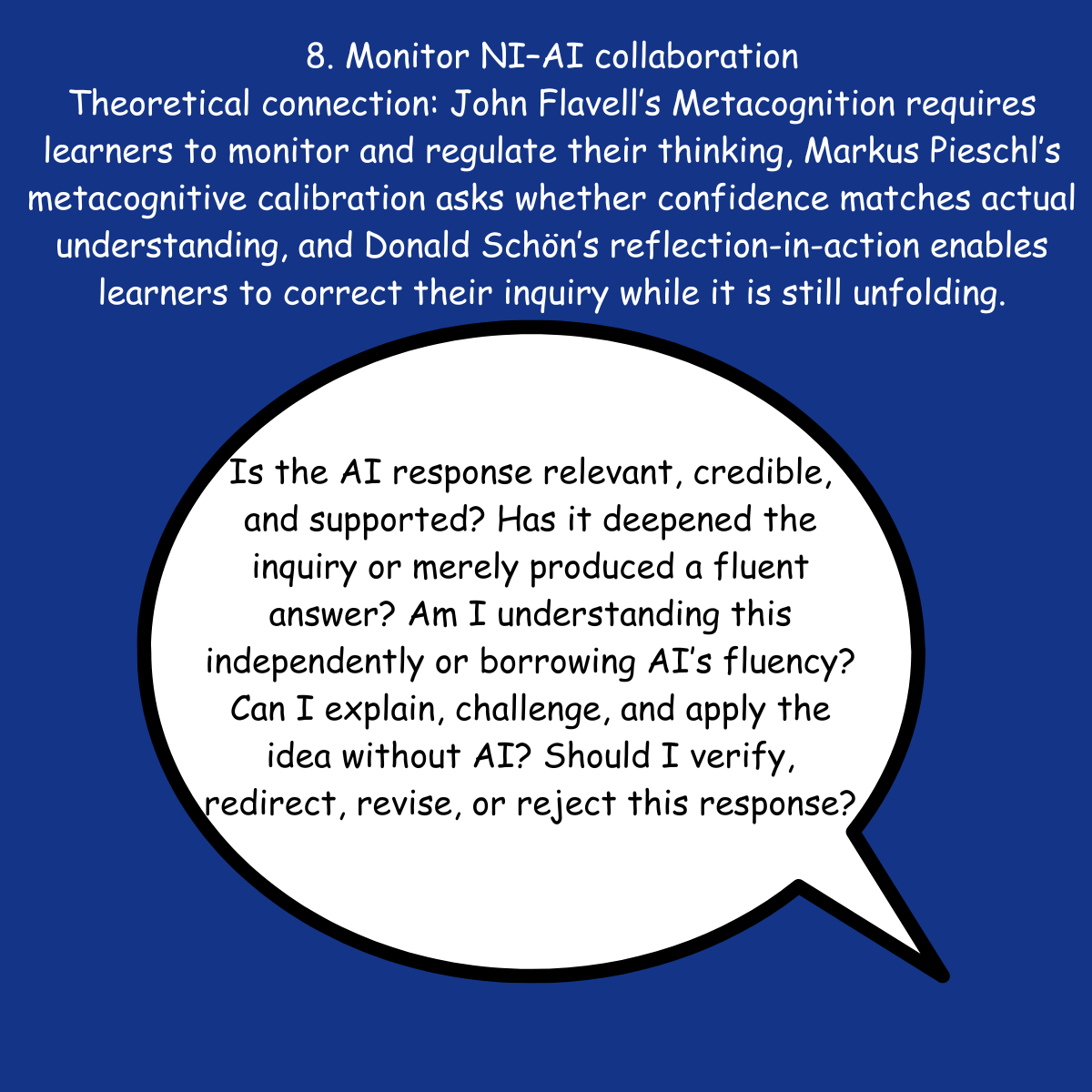
The Systematic Meta-Inquiry Process
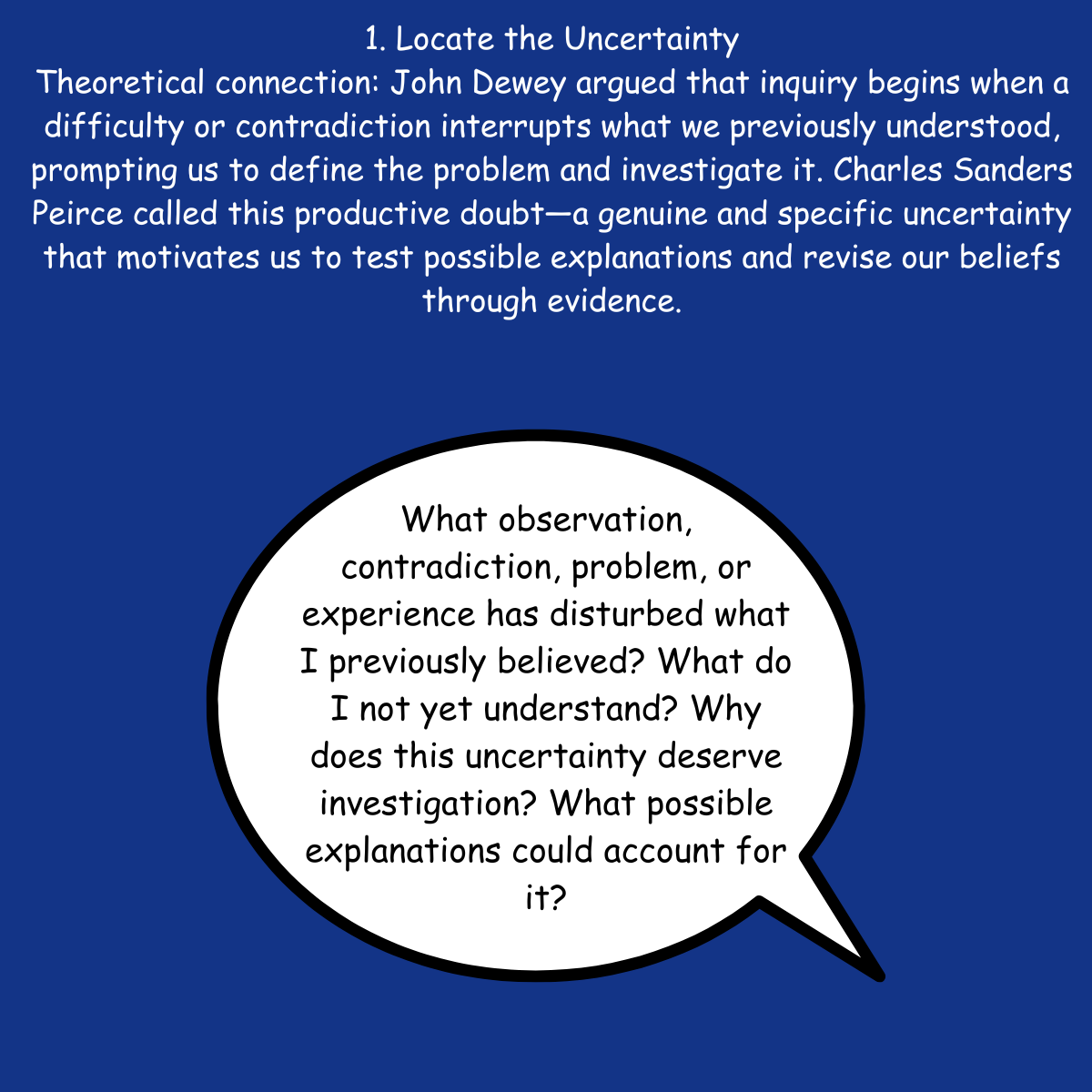
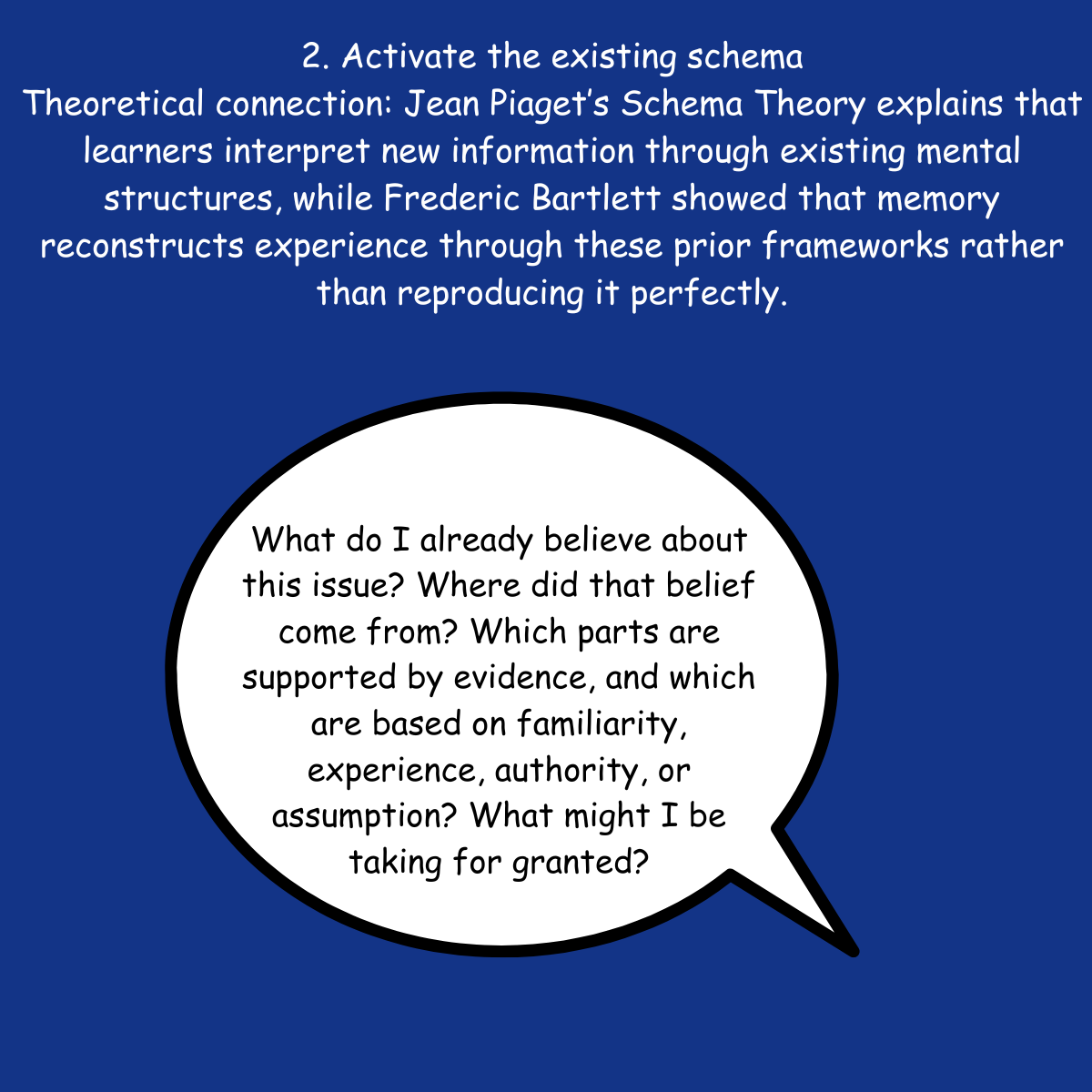
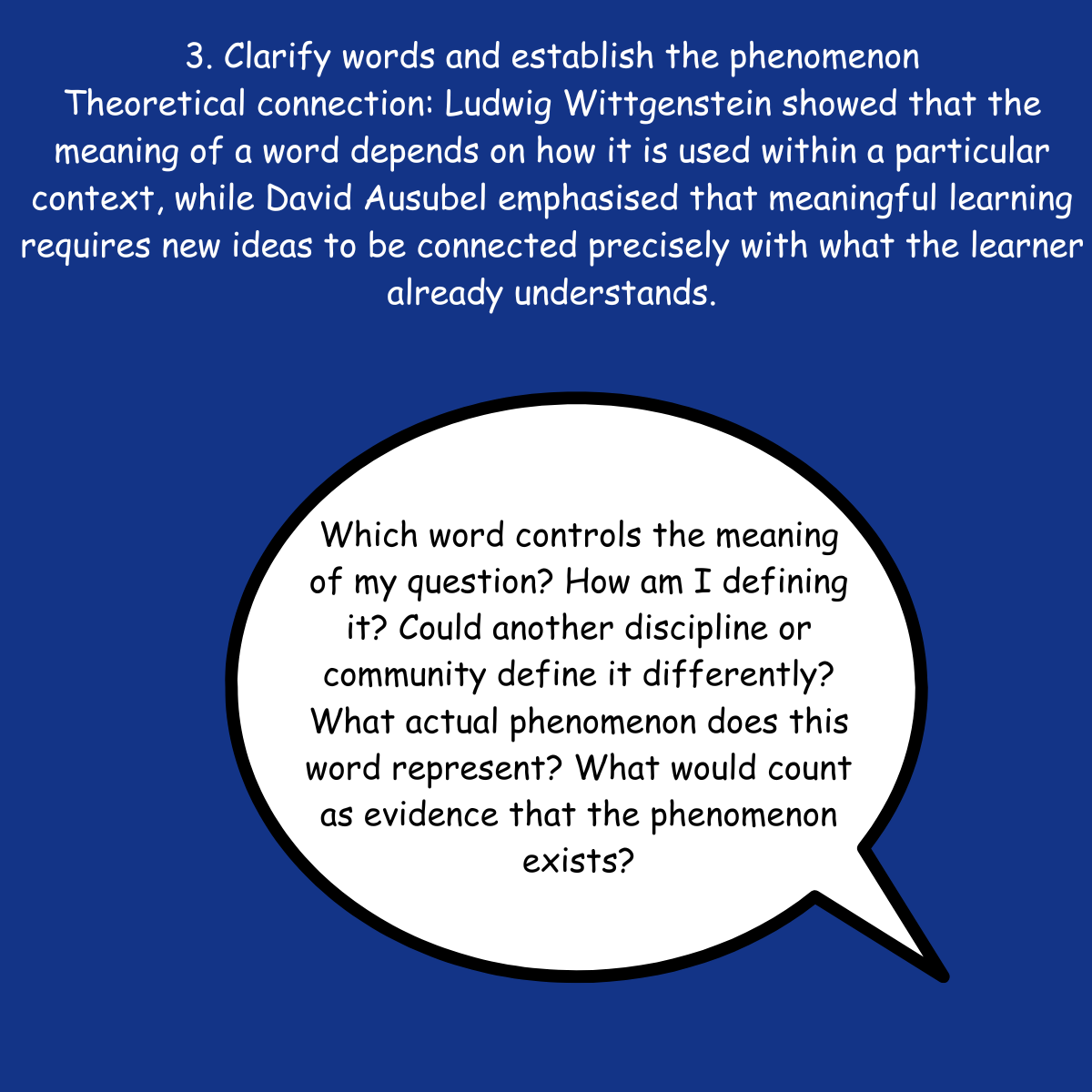
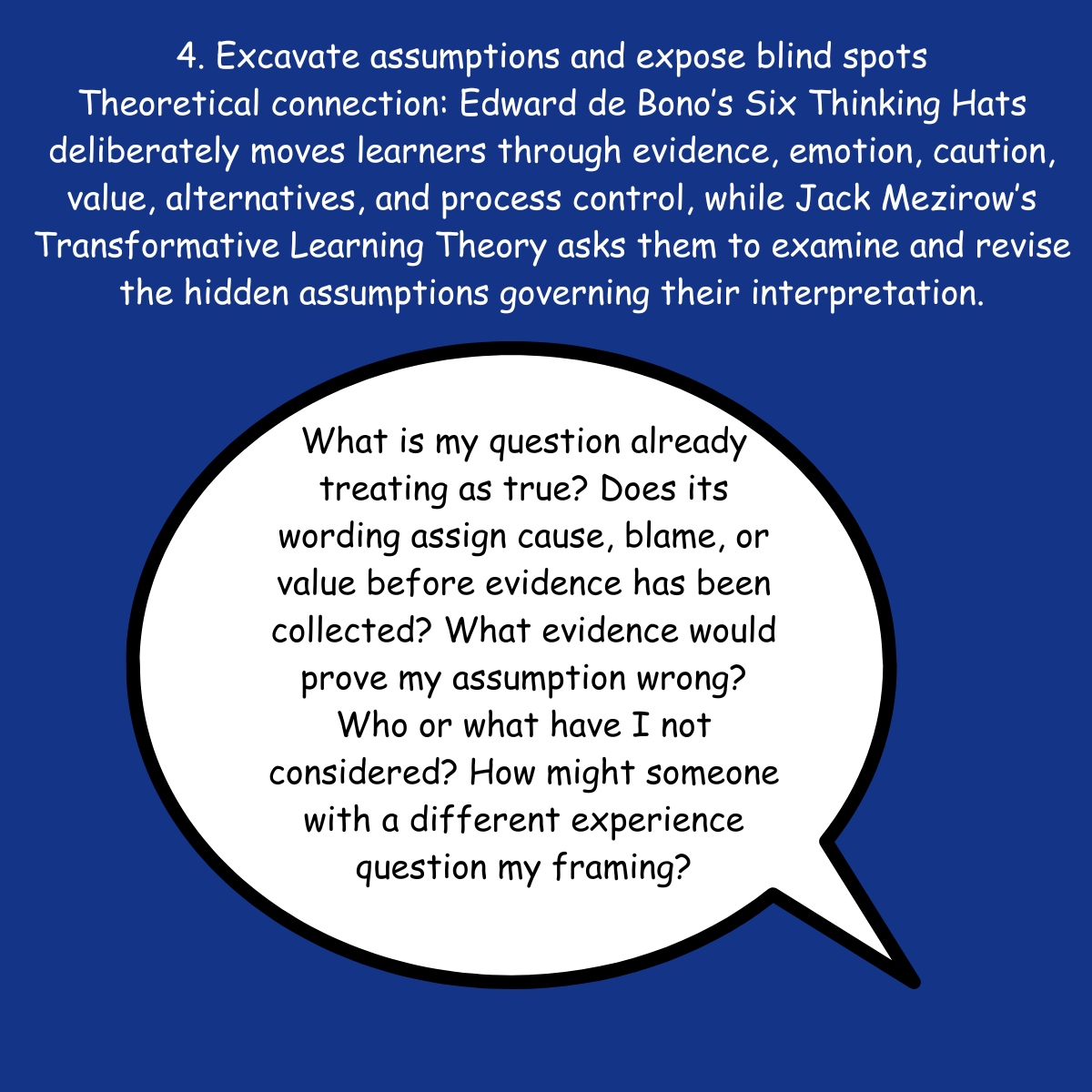
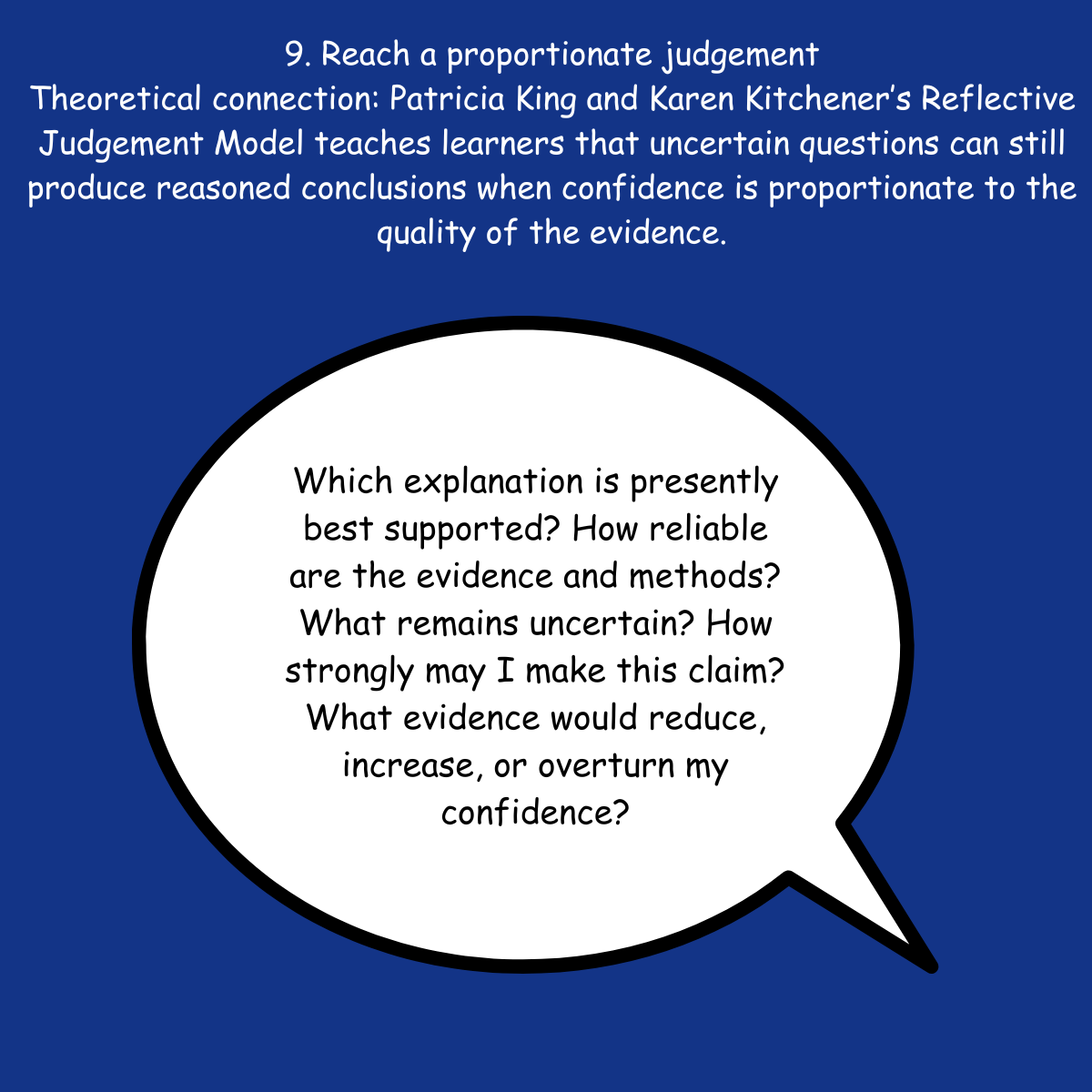
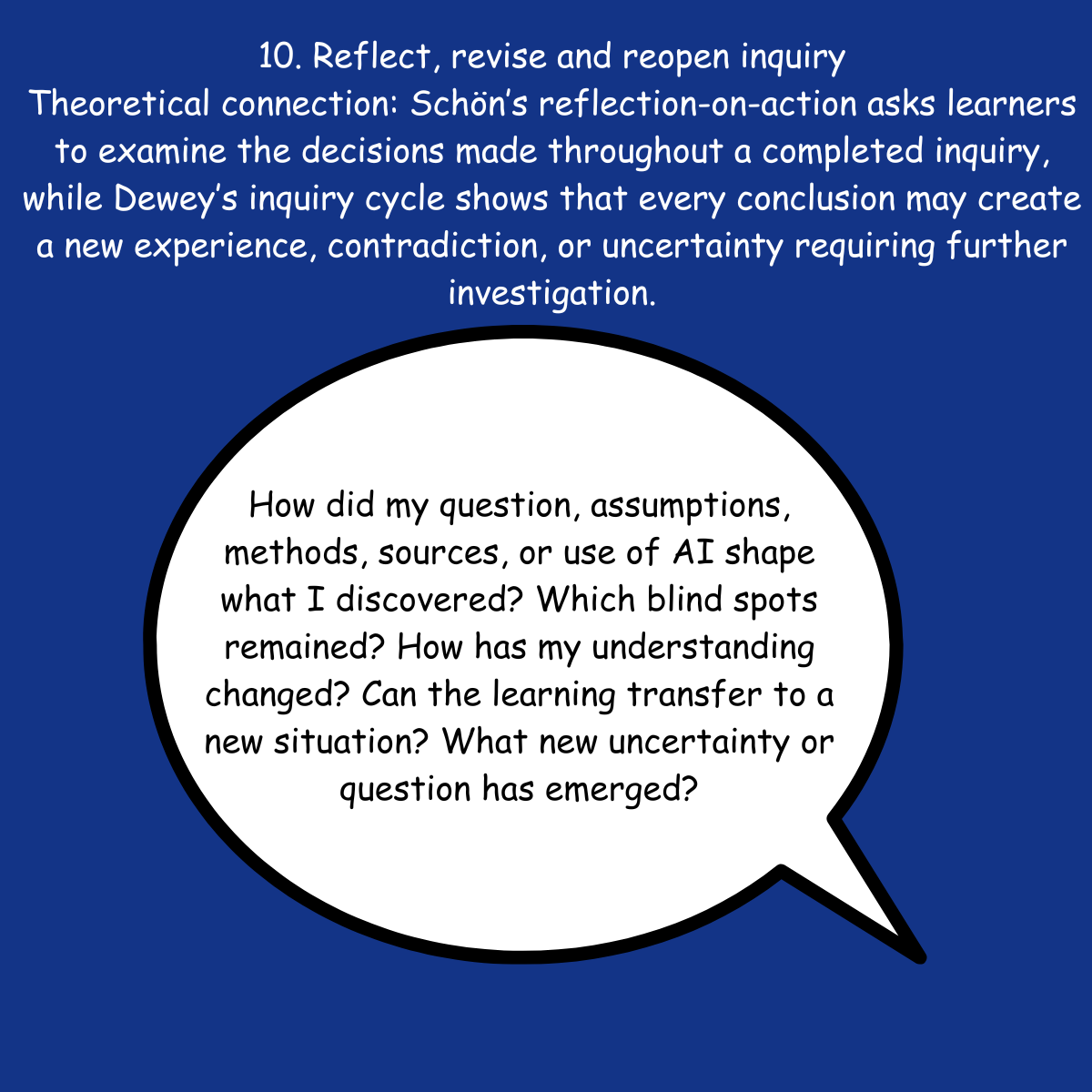
Why the Prompt Before the Prompt Is Necessary
The Prompt Before the Prompt creates the decisive pause in which learners activate their Natural Intelligence before AI answers. By examining prior knowledge, assumptions, missing voices, warm data and counter-evidence, they turn AI from a replacement for thought into an extension of it—and retain ownership of the knowledge they construct.
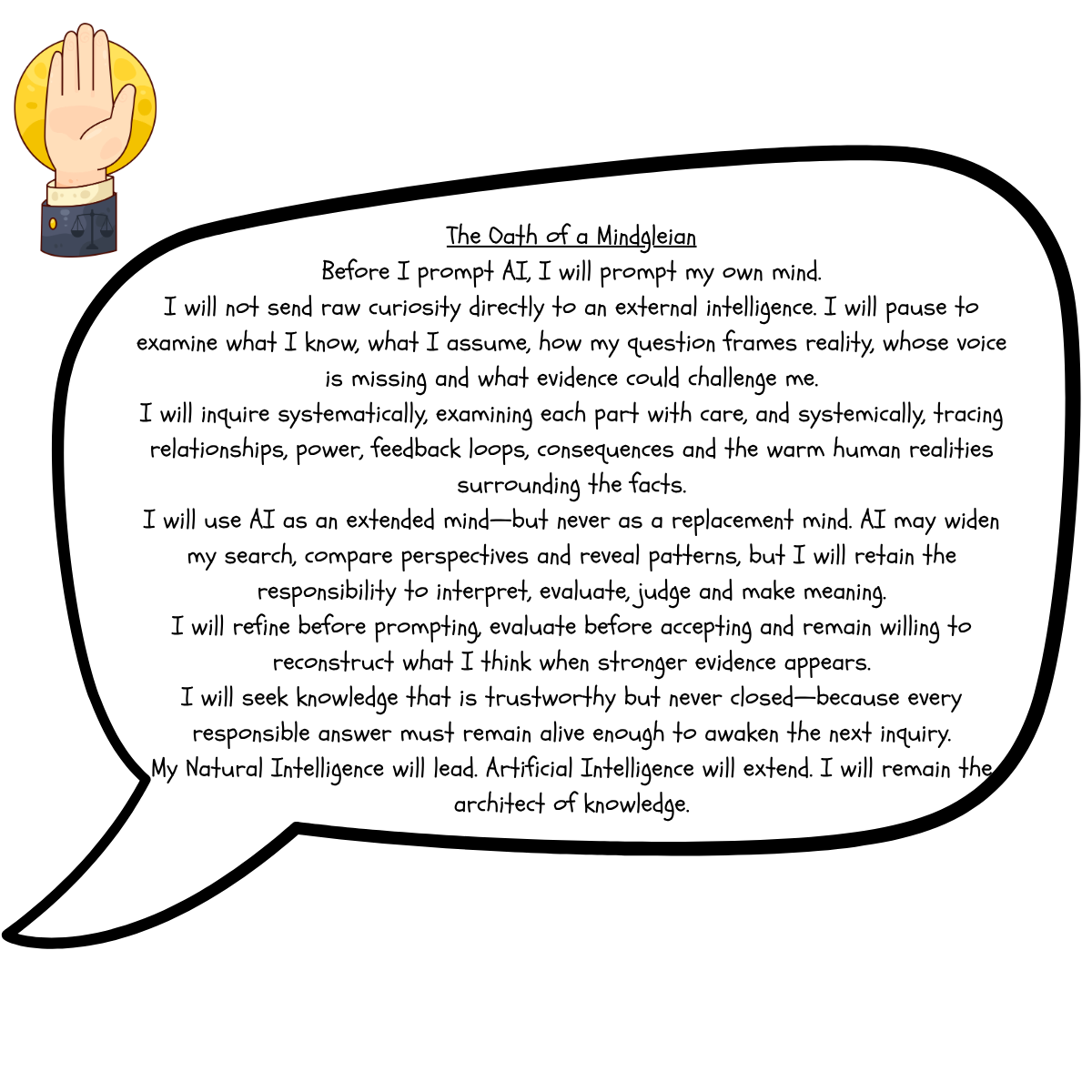
The Mindgleian Oath
Before I prompt AI, I will prompt my mind.
My mind will frame; AI will extend; I will judge.
I will refine before prompting and evaluate before accepting.
*“Learning theory becomes alive when it stops merely explaining the learner and begins speaking inside the learner—as the inner questions through which they design, challenge and transform their own inquiry.”
| Inquiry approach | Theory / framework | What it says in one line | How it promotes inquiry |
|---|
| Systematic | Dewey’s Reflective Inquiry | Inquiry begins with a felt difficulty and proceeds through problem definition, possible explanations, reasoning and testing. | Converts uncertainty into an ordered, evidence-seeking investigation. |
| Systematic | Peirce’s Theory of Inquiry | Genuine doubt unsettles belief and stimulates abductive, deductive and inductive reasoning. | Encourages learners to generate, test and revise explanations rather than accept immediate answers. |
| Systematic | Schema Theory — Bartlett/Piaget | New information is understood through existing knowledge structures. | Activates prior knowledge while exposing assumptions, misconceptions and gaps. |
| Systematic | Constructivism — Piaget/Vygotsky | Learners actively construct knowledge through experience, reasoning and dialogue. | Positions learners as knowledge architects rather than passive recipients. |
| Systematic | Metacognition — Flavell | Effective learners plan, monitor and evaluate their own thinking. | Enables learners to question how their inquiry design shapes what they can discover and conclude. |
| Systematic | Flow Theory — Csikszentmihalyi | Deep engagement occurs when challenge and ability are appropriately balanced. | Keeps inquiry intellectually demanding yet manageable enough to sustain progress. |
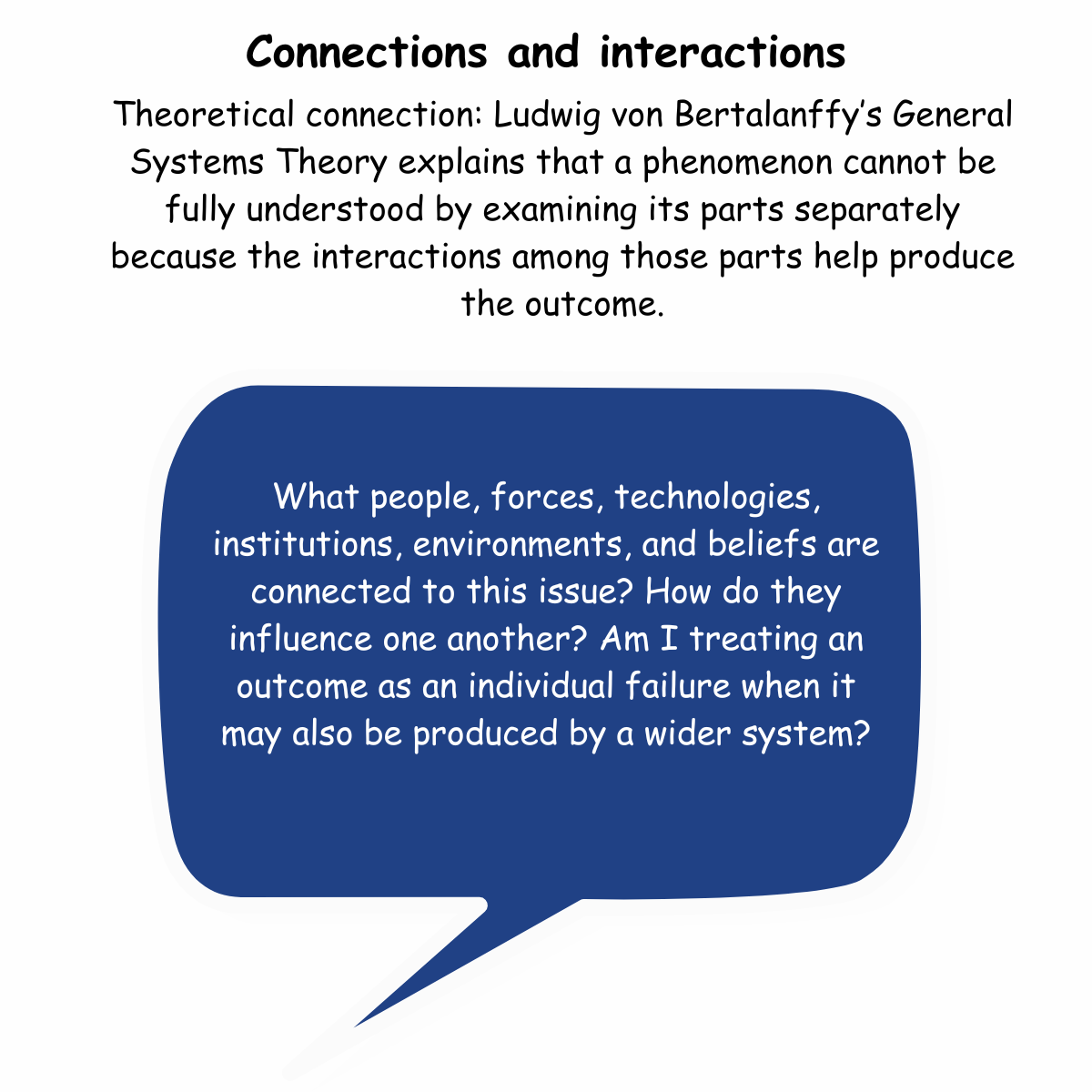
| Systemic | General Systems Theory — von Bertalanffy | A phenomenon must be understood through the interdependence of its parts, not through isolated elements. | Prompts learners to trace relationships, interactions and whole-system effects. |
| Systemic | Systems Thinking — Donella Meadows | Systems behave through structures, feedback loops, delays and leverage points. | Moves inquiry from describing events to investigating the structures that repeatedly produce them. |
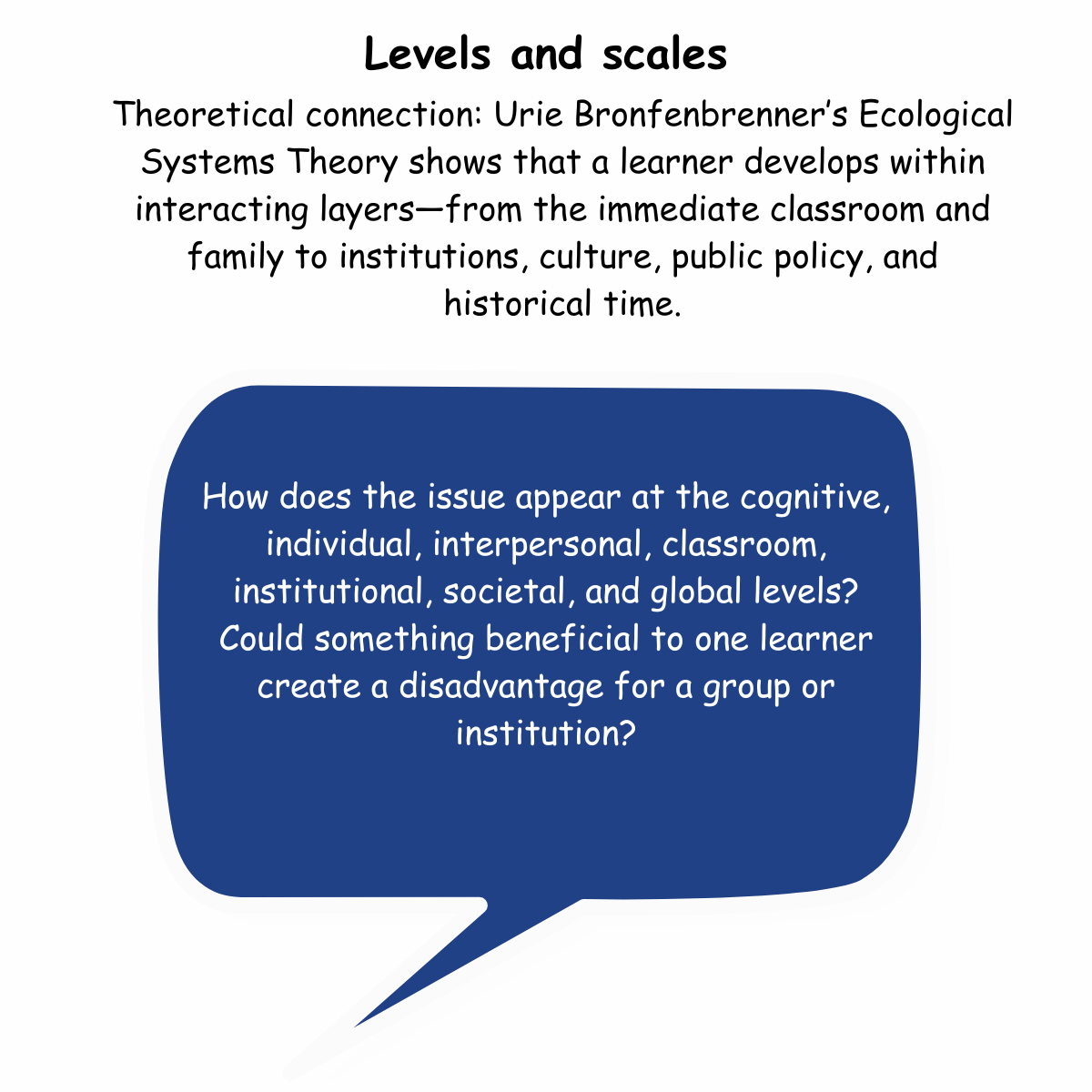
| Systemic | Ecological Systems Theory — Bronfenbrenner | Human experiences are shaped by interacting personal, relational, institutional, cultural and historical systems. | Expands inquiry across personal, local and global contexts. |
| Systemic | Complexity Theory — Edgar Morin | Outcomes emerge through nonlinear interactions, uncertainty and multiple causes. | Prevents oversimplified, single-cause explanations and encourages conditional conclusions. |
| Systemic | Warm Data — Nora Bateson | Meaning lies in the living relationships and contexts connecting parts of a complex system. | Brings emotions, cultures, relationships and lived realities into humane inquiry. |
| Systemic | Transdisciplinarity — Basarab Nicolescu | Complex realities require knowledge to move across and beyond disciplinary boundaries. | Integrates multiple disciplines and ways of knowing into a fuller explanation. |
| NI–AI bridge | Extended Mind Theory — Clark and Chalmers | External tools can extend cognition when they remain integrated with, rather than replace, human thinking. | Allows AI to extend evidence and perspectives while Natural Intelligence governs judgement and meaning-making. |