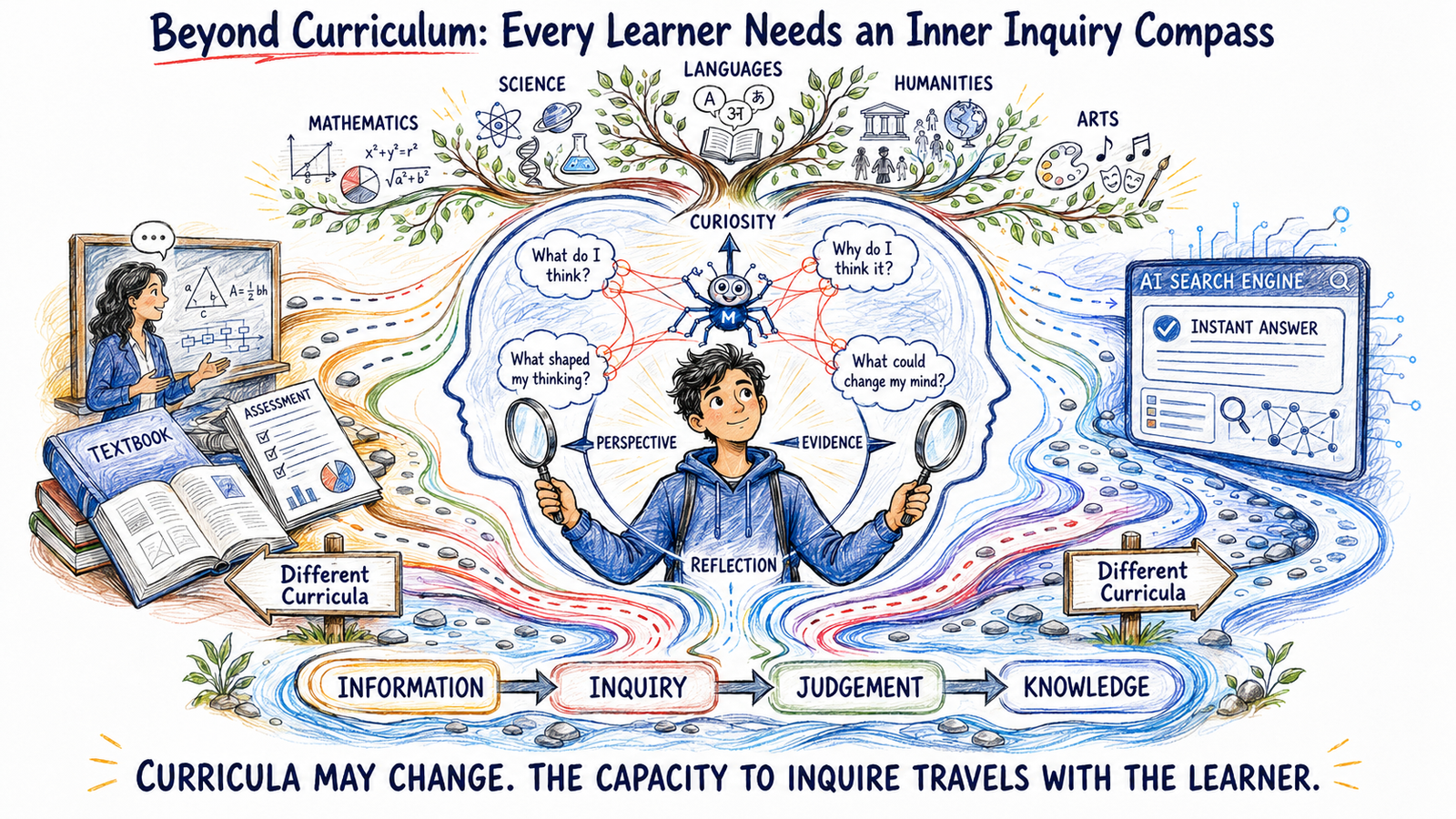
Irrespective of curriculum, learners must know not only what they think, but how and why that thinking was formed. A curriculum can organise content, but it cannot perform the learner’s inner work of questioning assumptions, recognising bias, examining emotion, comparing perspectives, testing evidence and revising judgement. Without this inquiry discipline, knowledge remains borrowed—from a teacher, textbook, peer group, search engine or AI—and the learner remains dependent on external authority. Mindgle makes the internal search engine visible by repeatedly asking: What do I think? Why do I think it? What shaped my thinking? What evidence or perspective could change my mind? This allows learners to use any curriculum as a pathway and AI as a resource, while retaining ownership of the curiosity, reasoning, judgement and responsibility through which information genuinely becomes knowledge.
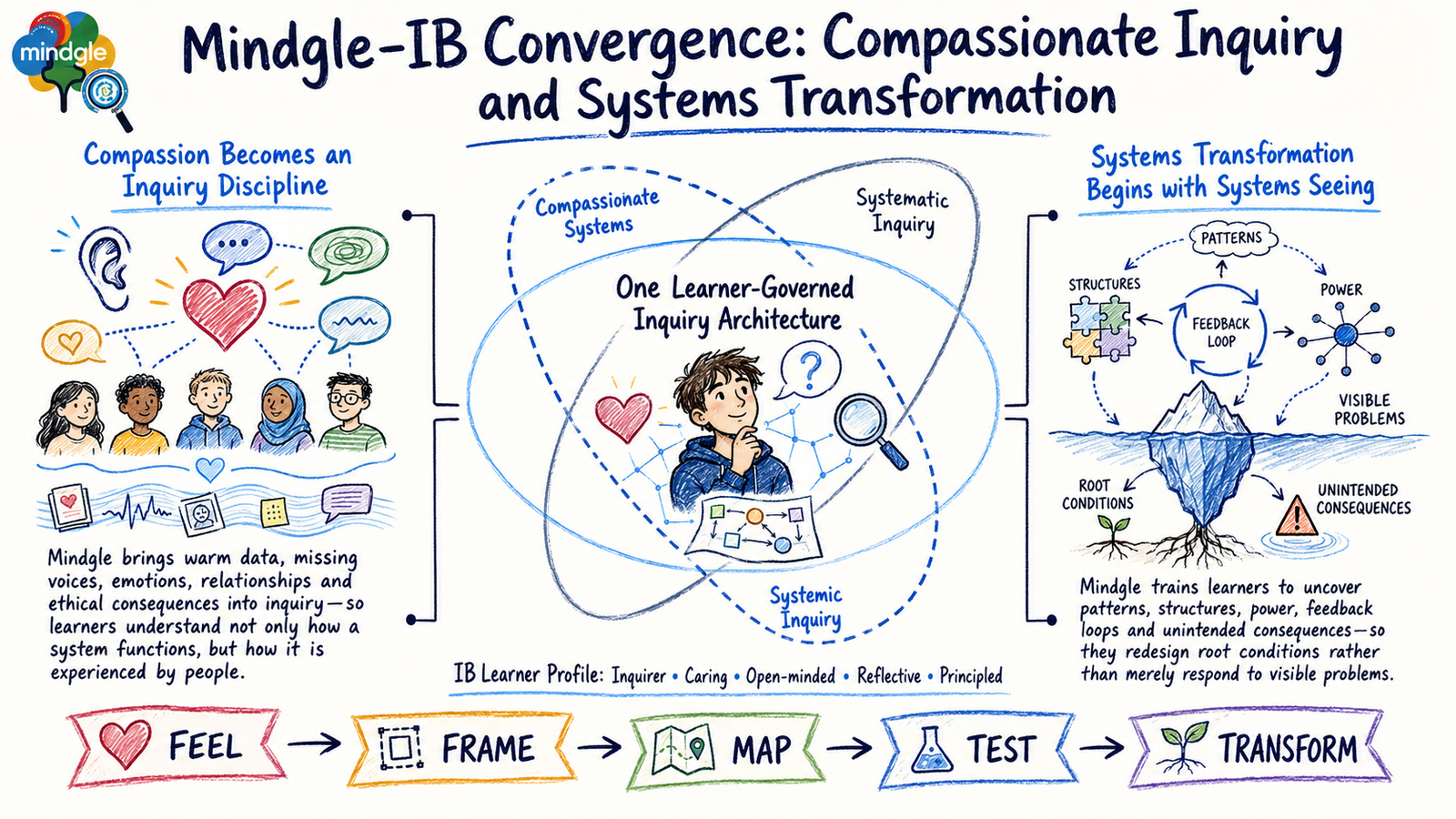
Mindgle gives the IB Learner Profile an operational inquiry architecture: the inquirer begins by listening to warm data—emotions, relationships, cultures and missing voices—then maps structures, power, feedback loops and unintended consequences before deciding what change is ethically defensible. Here, caring does not merely sit beside thinking; it disciplines what deserves to be asked, whose evidence counts and whom a proposed solution may affect. Open-mindedness widens perspectives, reflection audits assumptions, principled judgement tests consequences, and systems seeing moves inquiry from treating visible symptoms to transforming root conditions. The result is not merely an IB learner who can answer questions, but a learner-governed inquiry architect who can feel, frame, map, test and transform—using AI to extend investigation while Natural Intelligence retains purpose, judgement and responsibility.
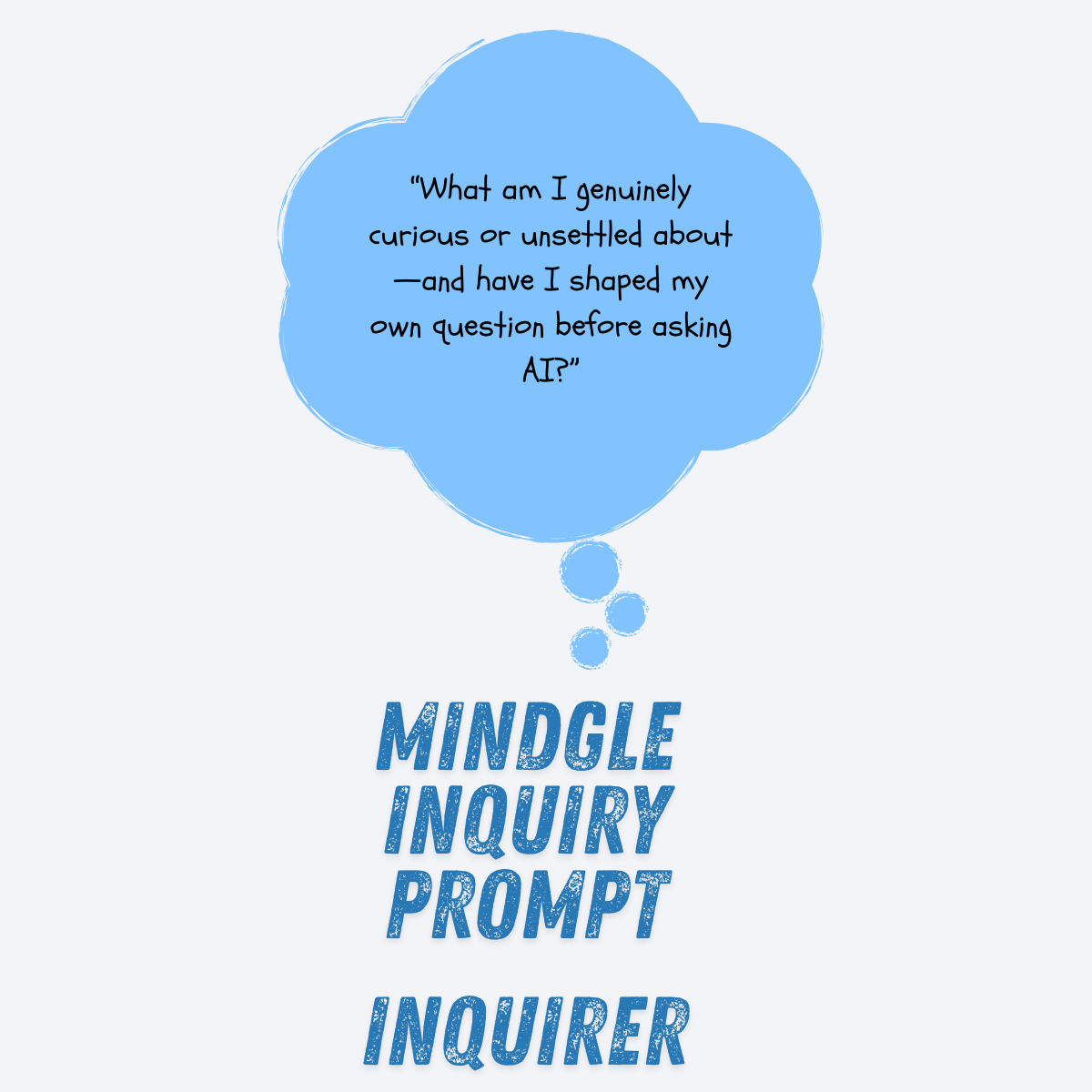
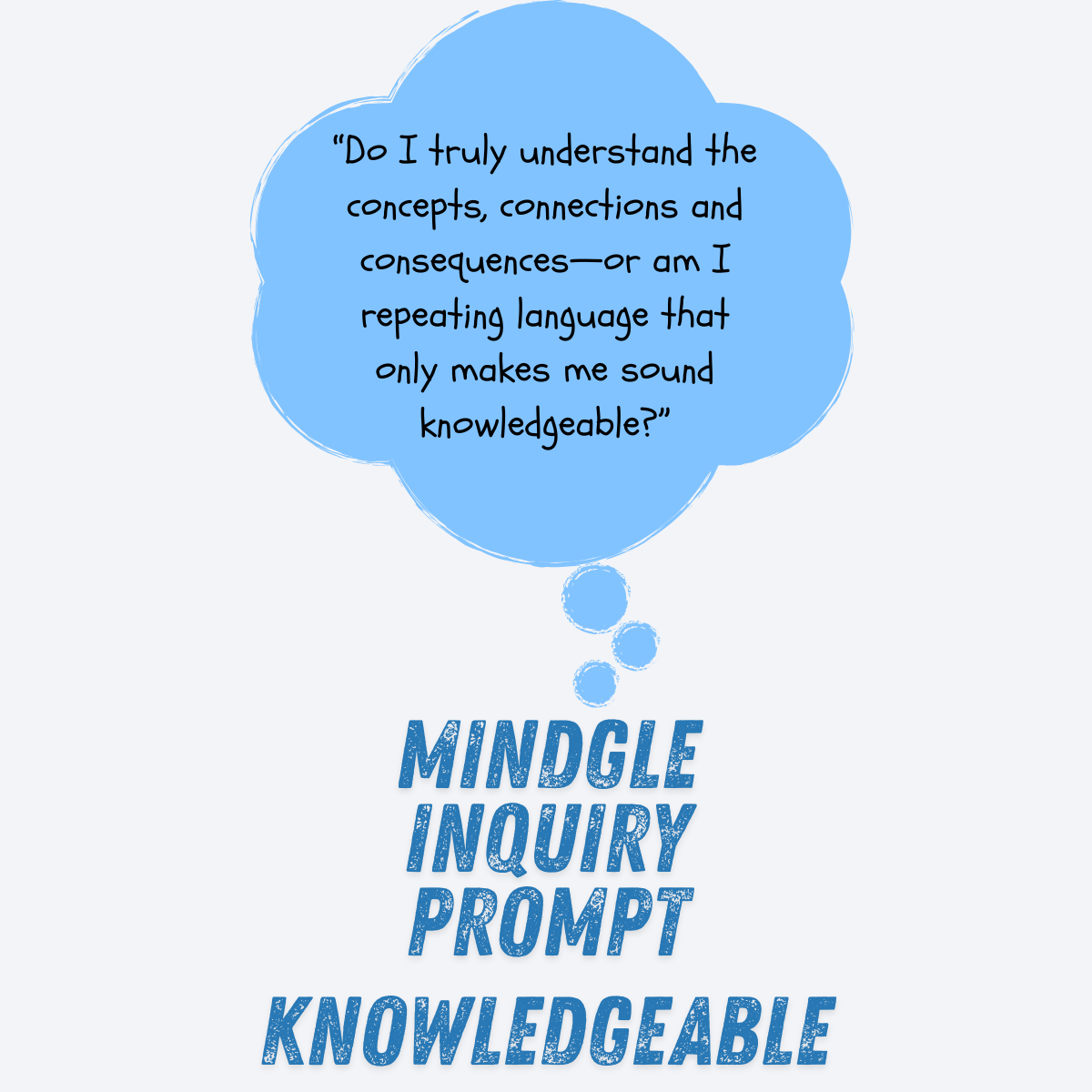
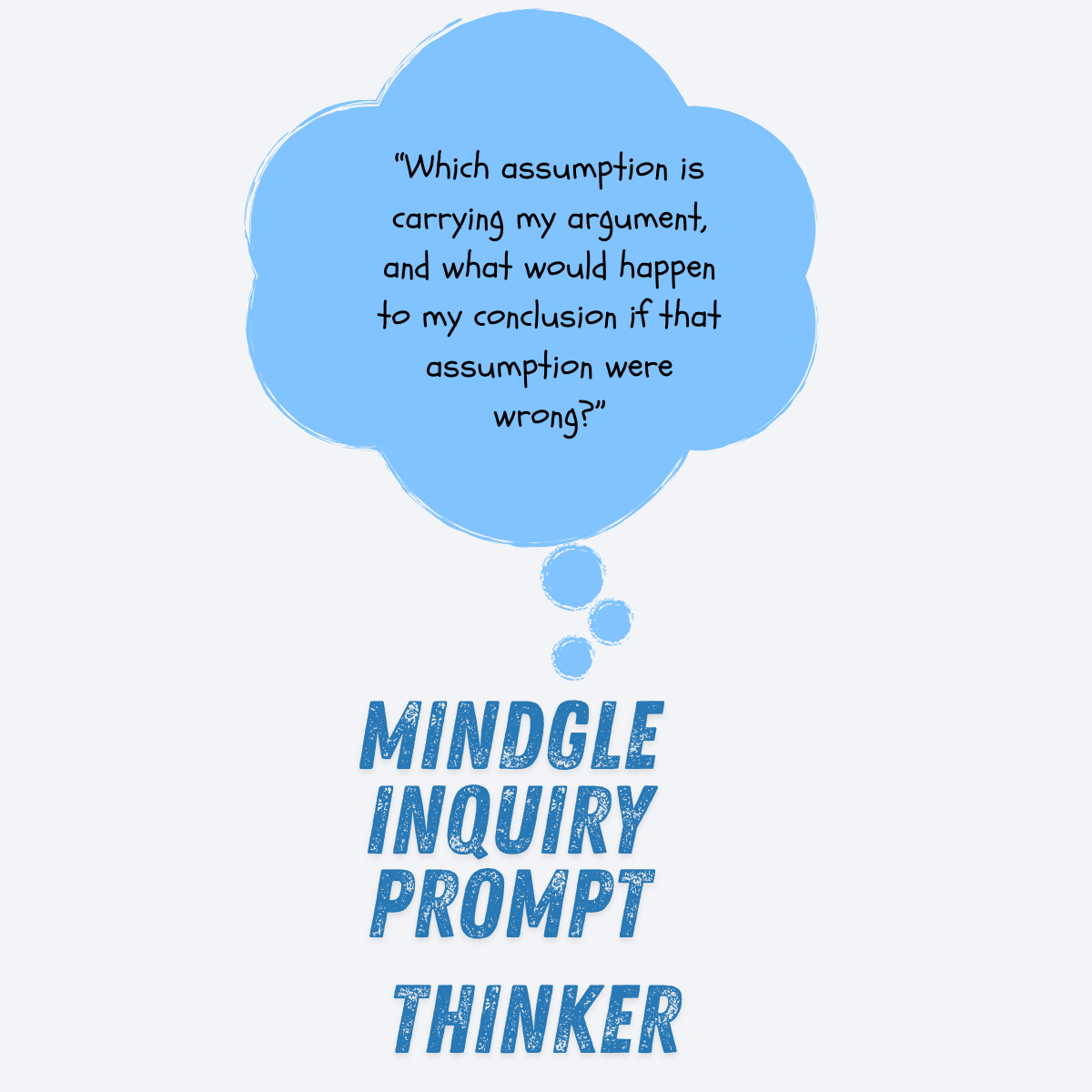
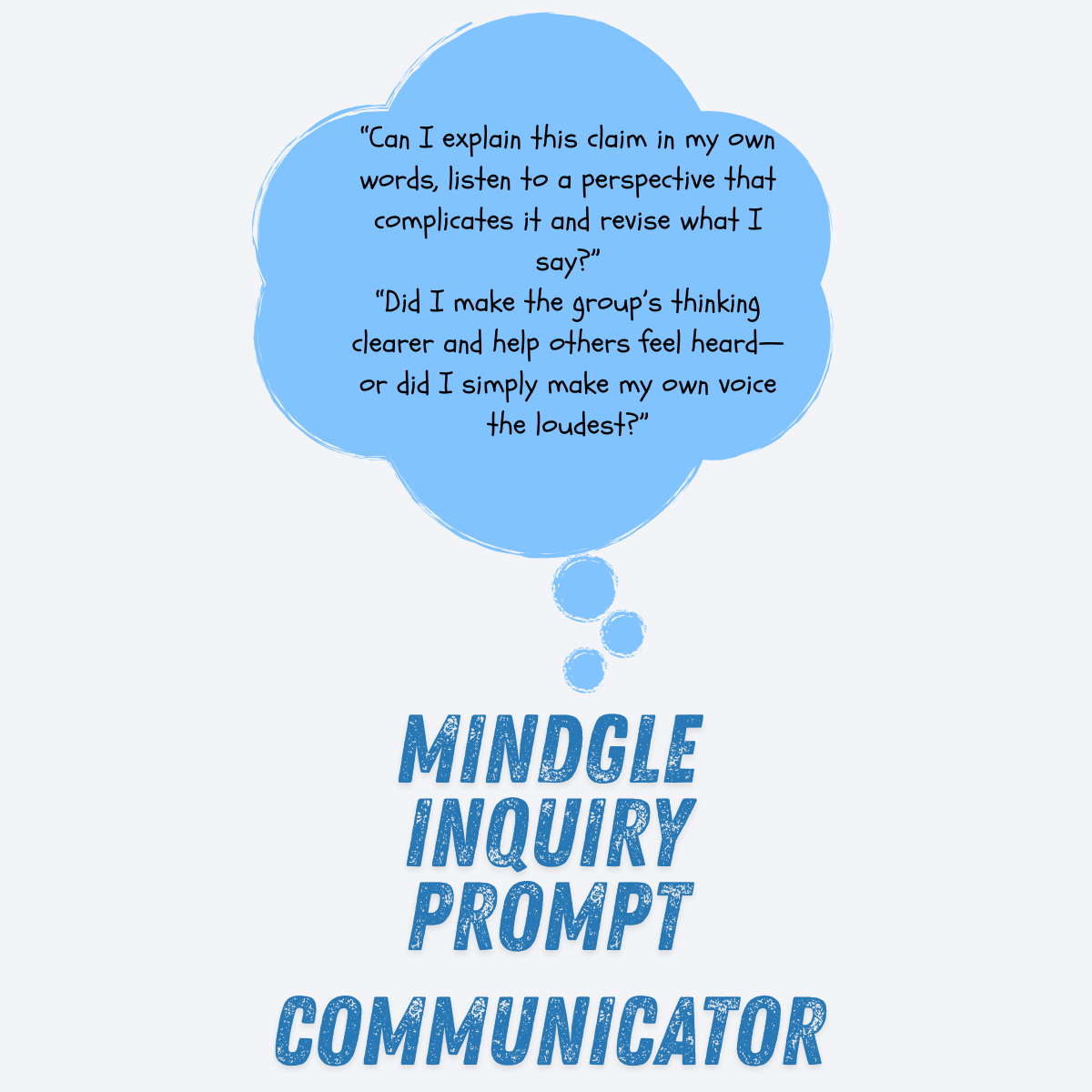
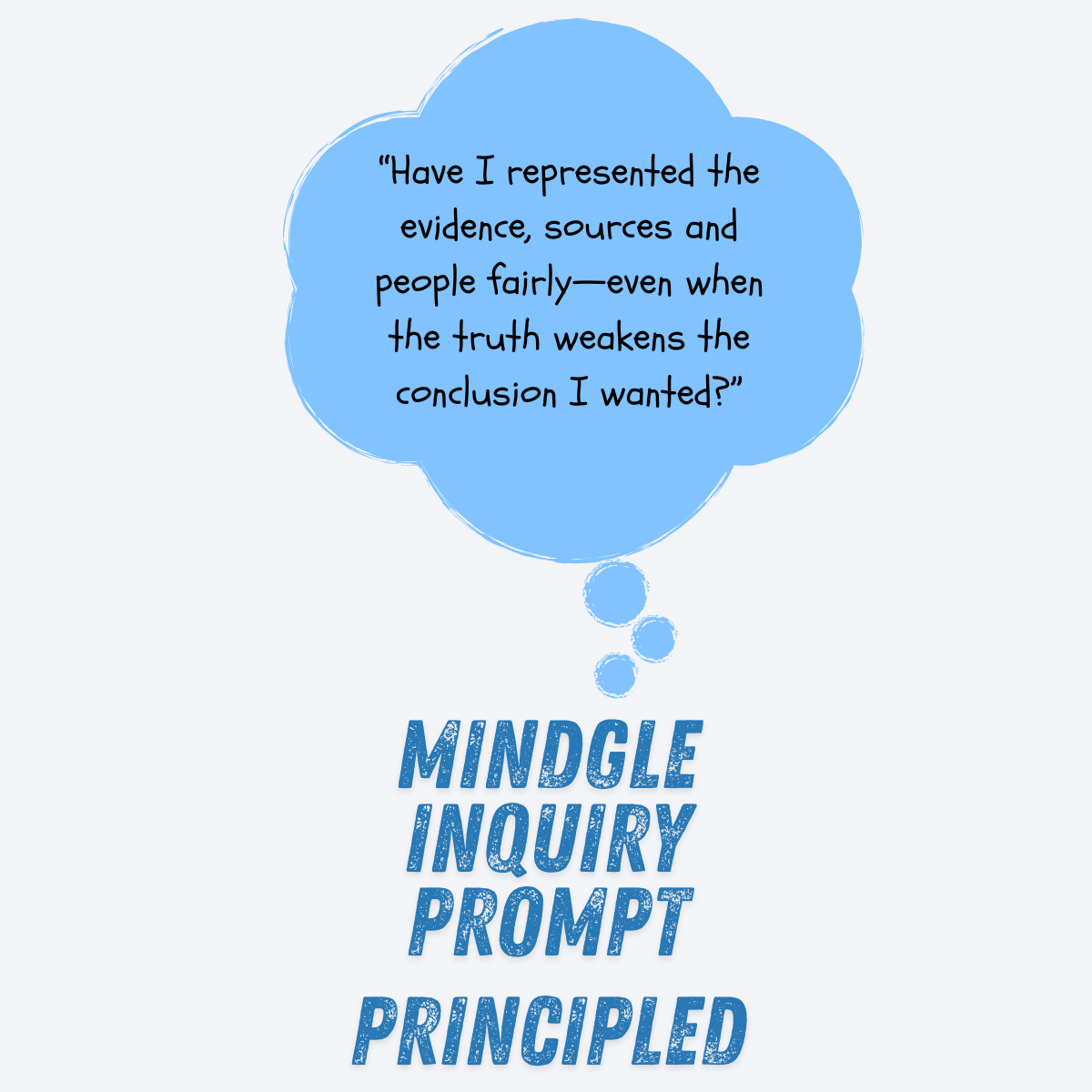
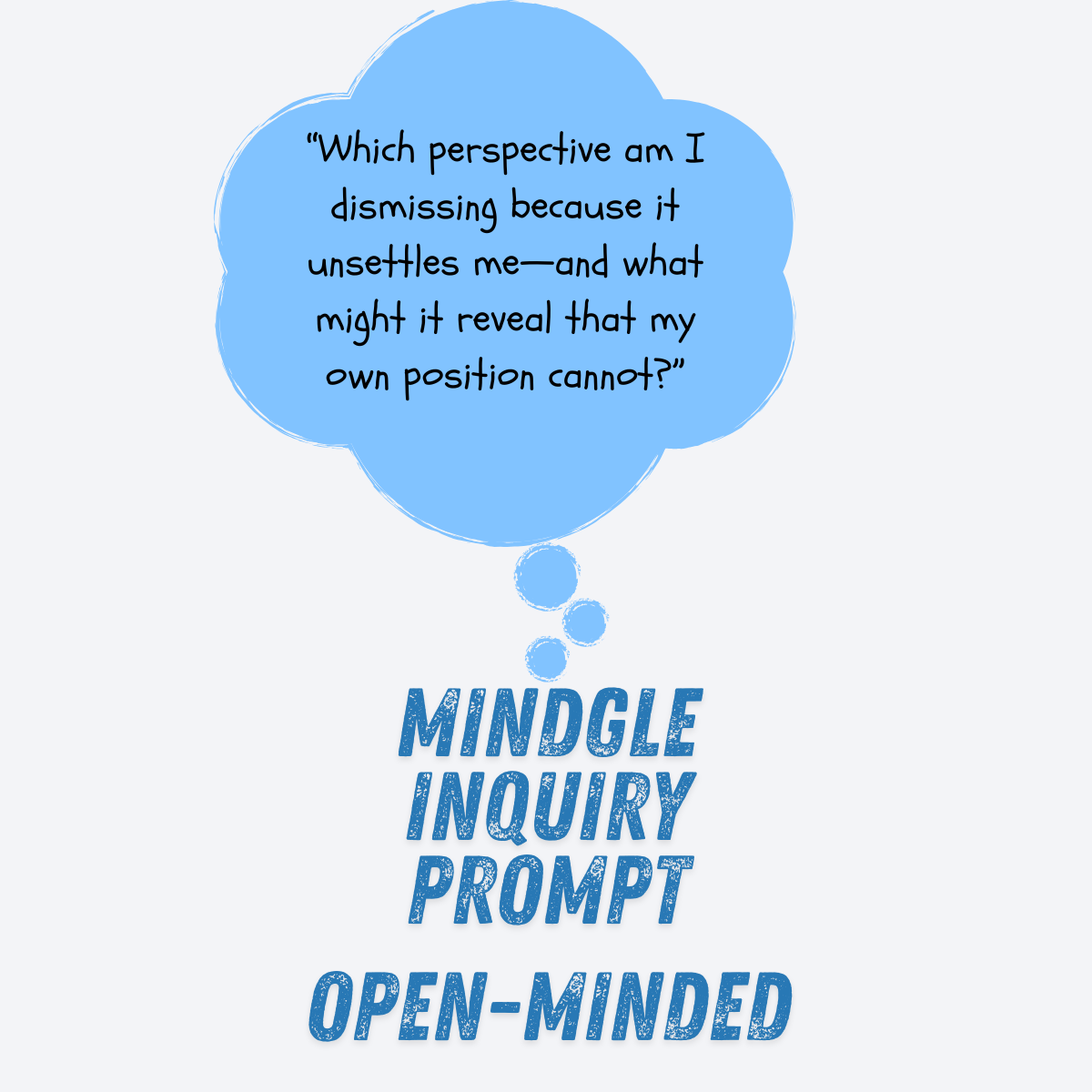
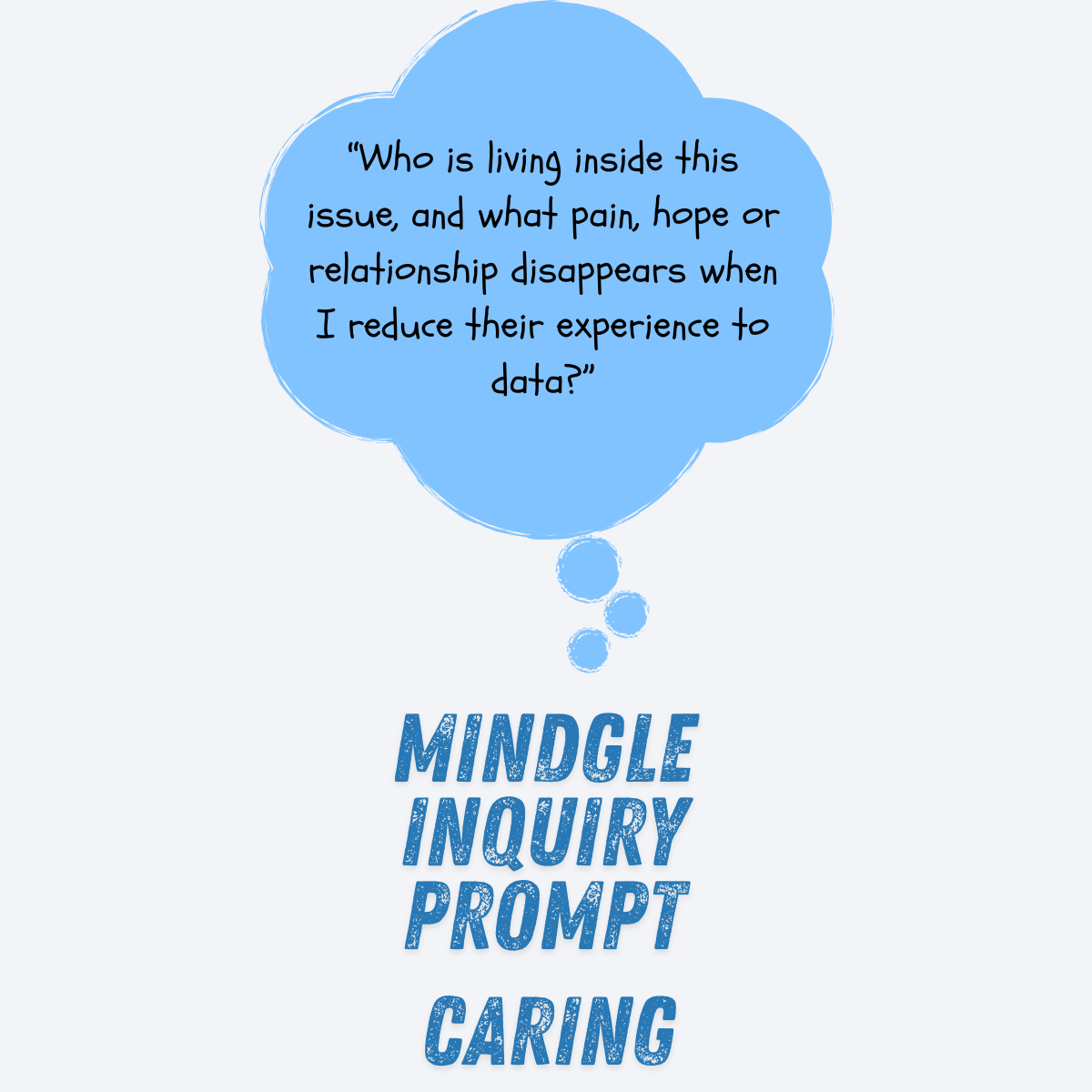
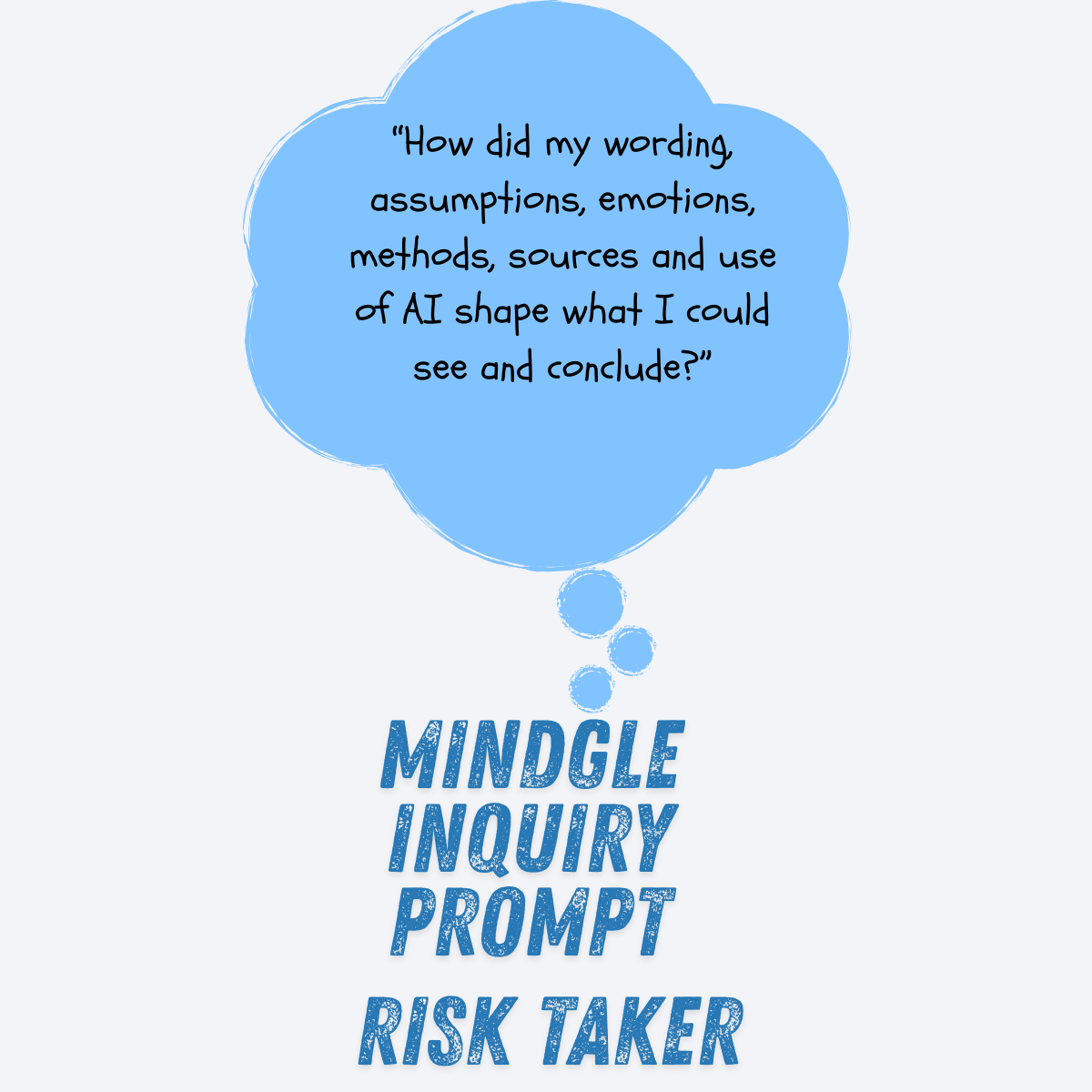
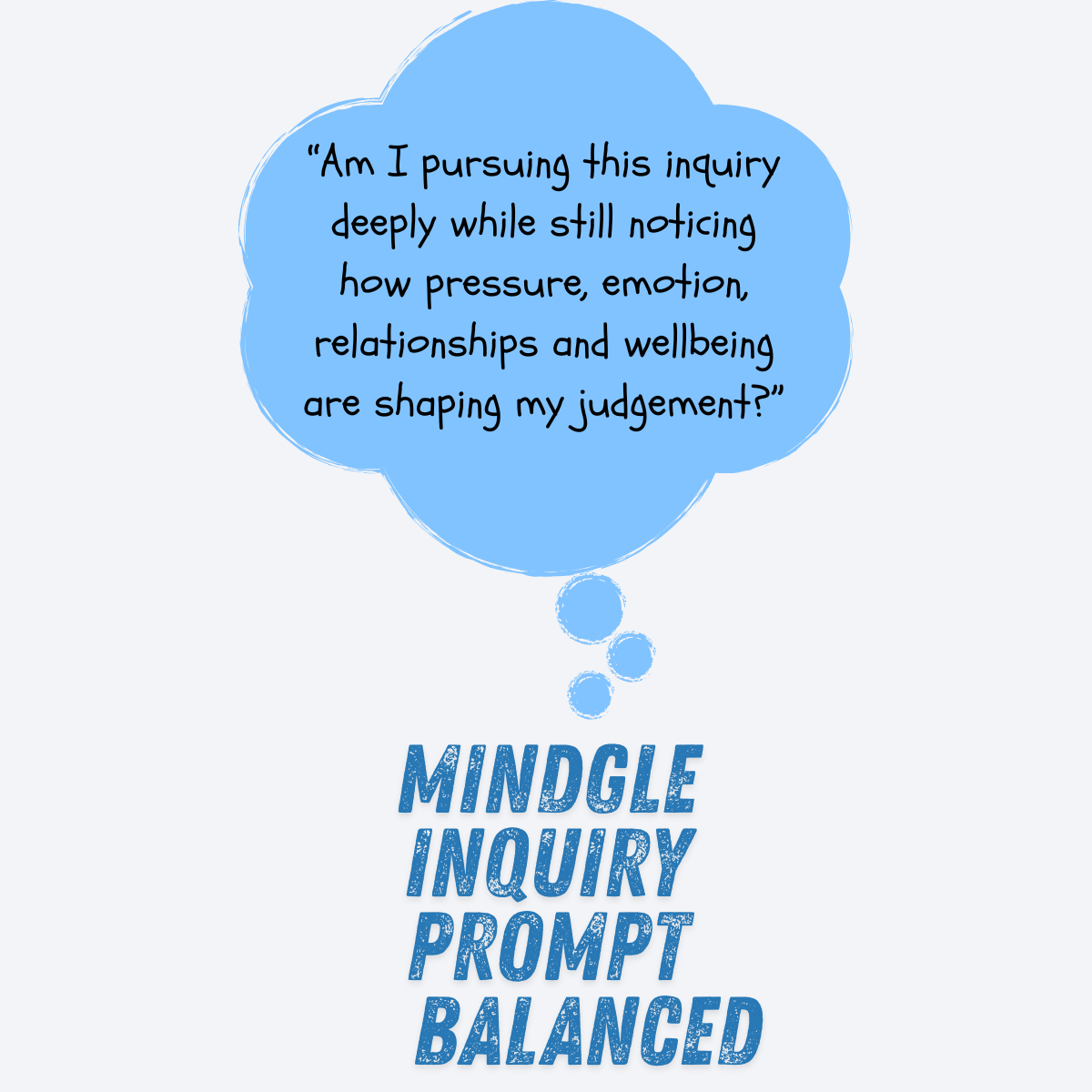
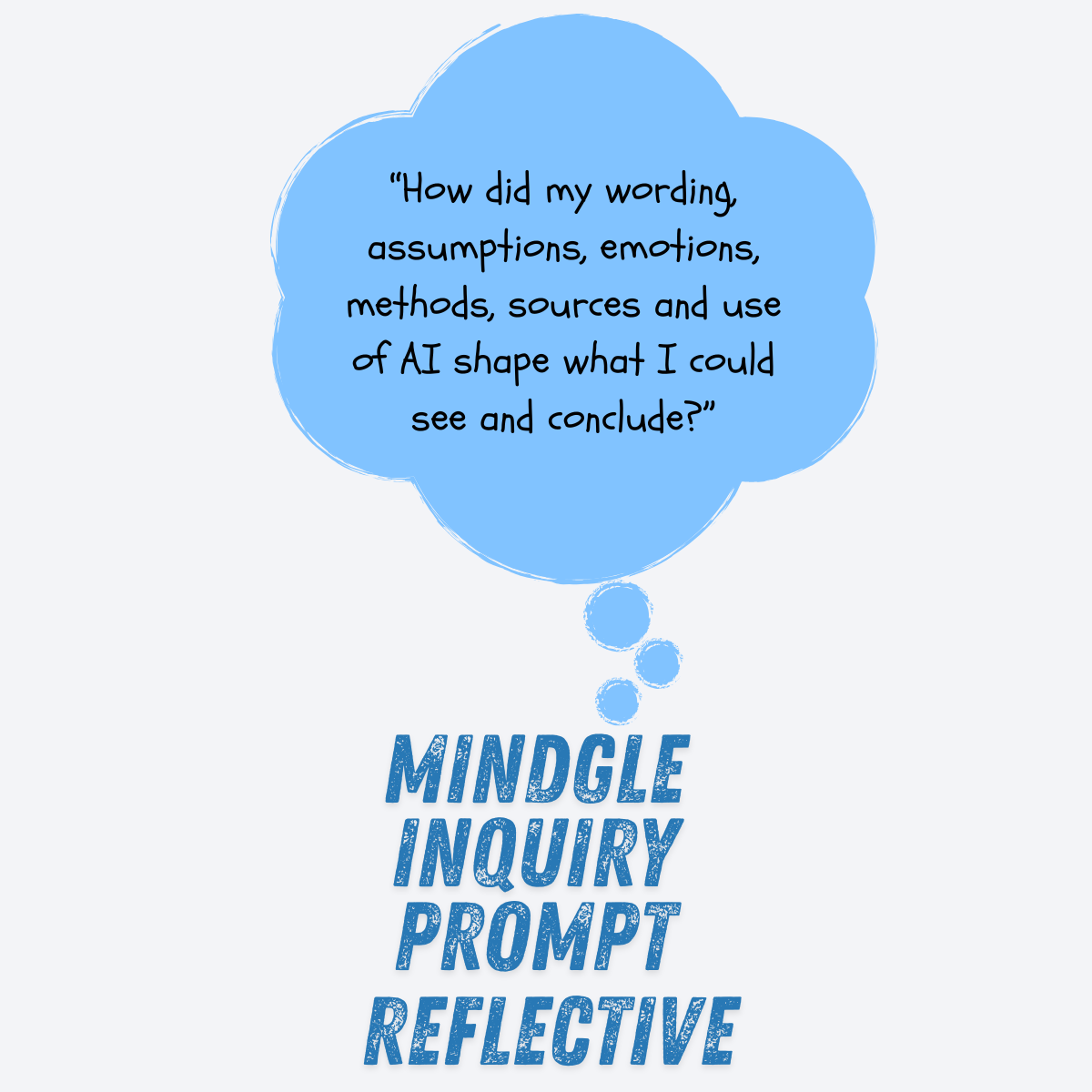
Mindgle operationalises the IB Learner Profile by turning each attribute into a visible inquiry decision: learners become inquirers by shaping their own questions before approaching AI; knowledgeable by understanding concepts, connections and consequences rather than repeating terminology; thinkers by exposing assumptions and testing alternative explanations; principled by representing evidence, sources and people fairly; communicators by explaining clearly, listening deeply and ensuring that quieter voices are heard; open-minded by engaging with perspectives that unsettle their own position; and caring by bringing emotions, relationships, culture and lived experience into inquiry through warm data. They become risk-takers by remaining intellectually courageous in uncertainty, balanced by recognising how pressure and wellbeing shape judgement, and reflective by examining how their wording, methods, sources and use of AI influenced what they could see and conclude.